In yoga, samskaras are subtle impressions left by repeated thoughts, actions, and experiences. They shape habits, reactions, and inner tendencies. This guide keeps the idea simple for beginners while respecting the tradition behind it.
Simple answer
In yoga, samskaras are subtle impressions left by repeated thoughts, actions, and experiences. They shape habits, reactions, and inner tendencies.
Samskara is a layered Sanskrit word. It can mean refinement, a mental impression, a cultural habit, or a rite that shapes a person’s life. That is why the same word appears in discussions of Hindu rituals, yoga psychology, literature, and daily character.
The important thing is to understand the idea clearly, not just memorize a translation.
For practice context, pair this with our Yoga beginner guide and this overview of types of yoga.
Why the idea matters
For young readers, samskara is useful because it connects outer culture with inner growth: repeated actions shape memory, memory shapes habit, and habit slowly shapes character.
No single English word captures every use of samskara. A family may use it for rites of passage, a yoga teacher may use it for inner patterns, and a literary discussion may use it as a title or cultural symbol.
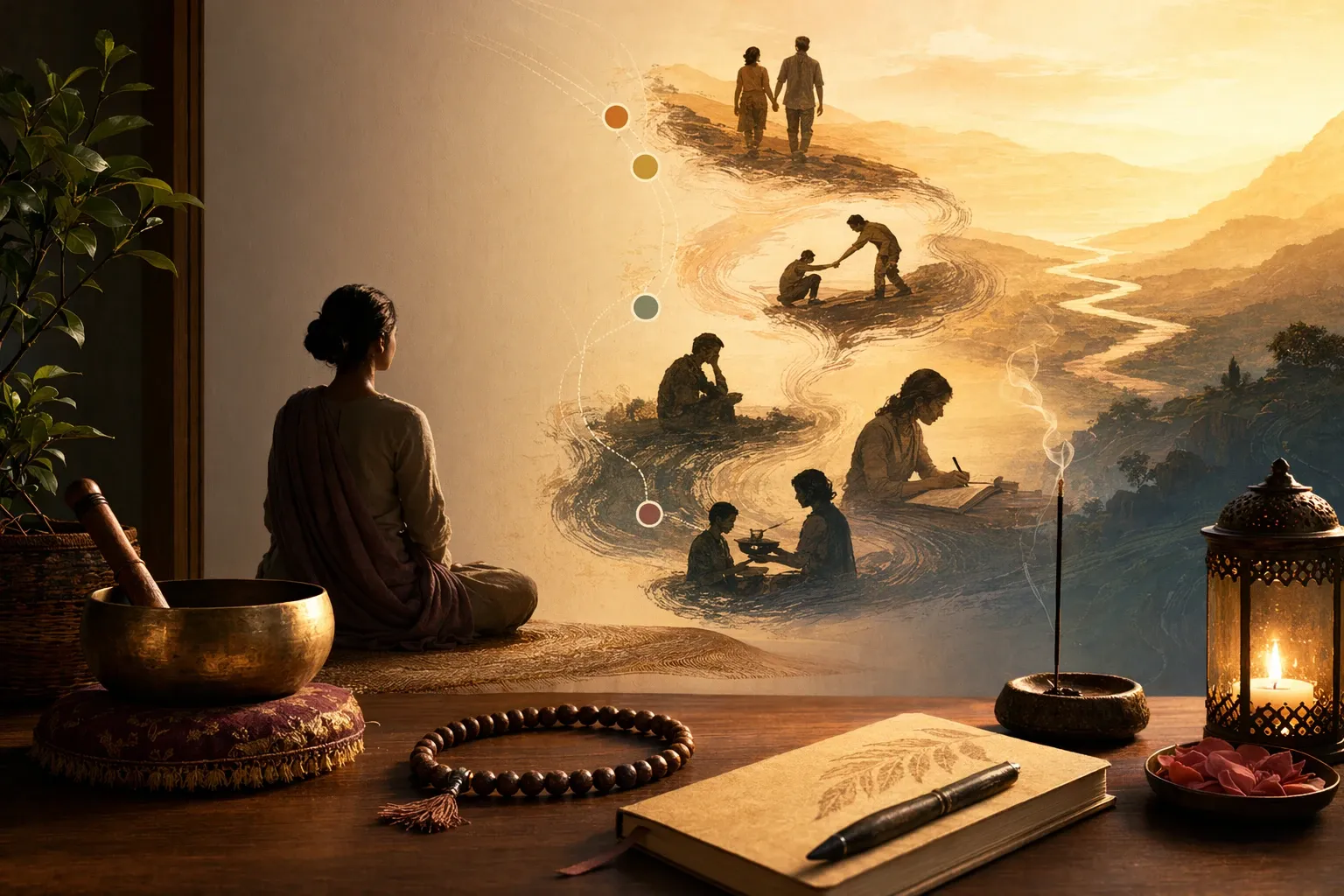
In yoga thought, every repeated action and reaction can leave a subtle trace. These traces influence what feels natural to us: how we respond to praise, insult, boredom, stress, desire, or fear.
Yoga practice works partly by making these patterns visible. Breath, meditation, ethical discipline, study, and self-observation help a person stop reacting automatically.
Yoga meaning of samskara
In yoga thought, every repeated action and reaction can leave a subtle trace. These traces influence what feels natural to us: how we respond to praise, insult, boredom, stress, desire, or fear.
For samskara topics, context decides the meaning. The same word may point to an outer rite, an inner habit, a cultural value, or a philosophical formation.
How repeated actions become patterns
Yoga practice works partly by making these patterns visible. Breath, meditation, ethical discipline, study, and self-observation help a person stop reacting automatically.
For samskara topics, context decides the meaning. The same word may point to an outer rite, an inner habit, a cultural value, or a philosophical formation.
Connection with vasanas and habits in simple terms
This part matters because “Connection with vasanas and habits in simple terms” is usually where beginners get confused. A simple way to read it is to connect the word with its purpose, its traditional context, and its everyday lesson.
For samskara topics, context decides the meaning. The same word may point to an outer rite, an inner habit, a cultural value, or a philosophical formation.
What “releasing” can mean ethically and practically
This part matters because “What “releasing” can mean ethically and practically” is usually where beginners get confused. A simple way to read it is to connect the word with its purpose, its traditional context, and its everyday lesson.
For samskara topics, context decides the meaning. The same word may point to an outer rite, an inner habit, a cultural value, or a philosophical formation.
Journaling, awareness, seva, sadhana, and guidance—not miracle cures
This part matters because “Journaling, awareness, seva, sadhana, and guidance—not miracle cures” is usually where beginners get confused. A simple way to read it is to connect the word with its purpose, its traditional context, and its everyday lesson.
For samskara topics, context decides the meaning. The same word may point to an outer rite, an inner habit, a cultural value, or a philosophical formation.
Common misunderstandings
- Samskara does not have just one English meaning.
- A rite of passage and a mental impression are related by the idea of shaping, but they are not the same usage.
- Family practice can vary widely across regions and communities.
- A difficult inner pattern is not a life sentence; practice can reshape habit.
Simple answers to common questions
What is samskara in yoga?
In yoga, samskaras are subtle impressions left by repeated thoughts, actions, and experiences. They shape habits, reactions, and inner tendencies.
How do past actions create mental impressions?
No single English word captures every use of samskara. A family may use it for rites of passage, a yoga teacher may use it for inner patterns, and a literary discussion may use it as a title or cultural symbol.
How to release samskara?
No single English word captures every use of samskara. A family may use it for rites of passage, a yoga teacher may use it for inner patterns, and a literary discussion may use it as a title or cultural symbol.
How to clear samskara?
No single English word captures every use of samskara. A family may use it for rites of passage, a yoga teacher may use it for inner patterns, and a literary discussion may use it as a title or cultural symbol.
How to heal samskara?
No single English word captures every use of samskara. A family may use it for rites of passage, a yoga teacher may use it for inner patterns, and a literary discussion may use it as a title or cultural symbol.
Why samskara matters in daily life
Samskara is useful because it explains why repeated actions shape the mind. A habit is not only something you do; it becomes a groove that makes the same response easier next time. In yoga, awareness helps us notice those grooves before they control our speech, choices, and reactions.
For a broader beginner context, read Yoga for beginners and our guide to types of yoga.
Change without miracle promises
Releasing samskaras does not mean deleting memory overnight. It means building new patterns through honesty, discipline, guidance, prayer or meditation where appropriate, seva, journaling, and steady practice. Deep wounds may also need professional care. A responsible guide should never turn samskara into a quick-cure slogan.