
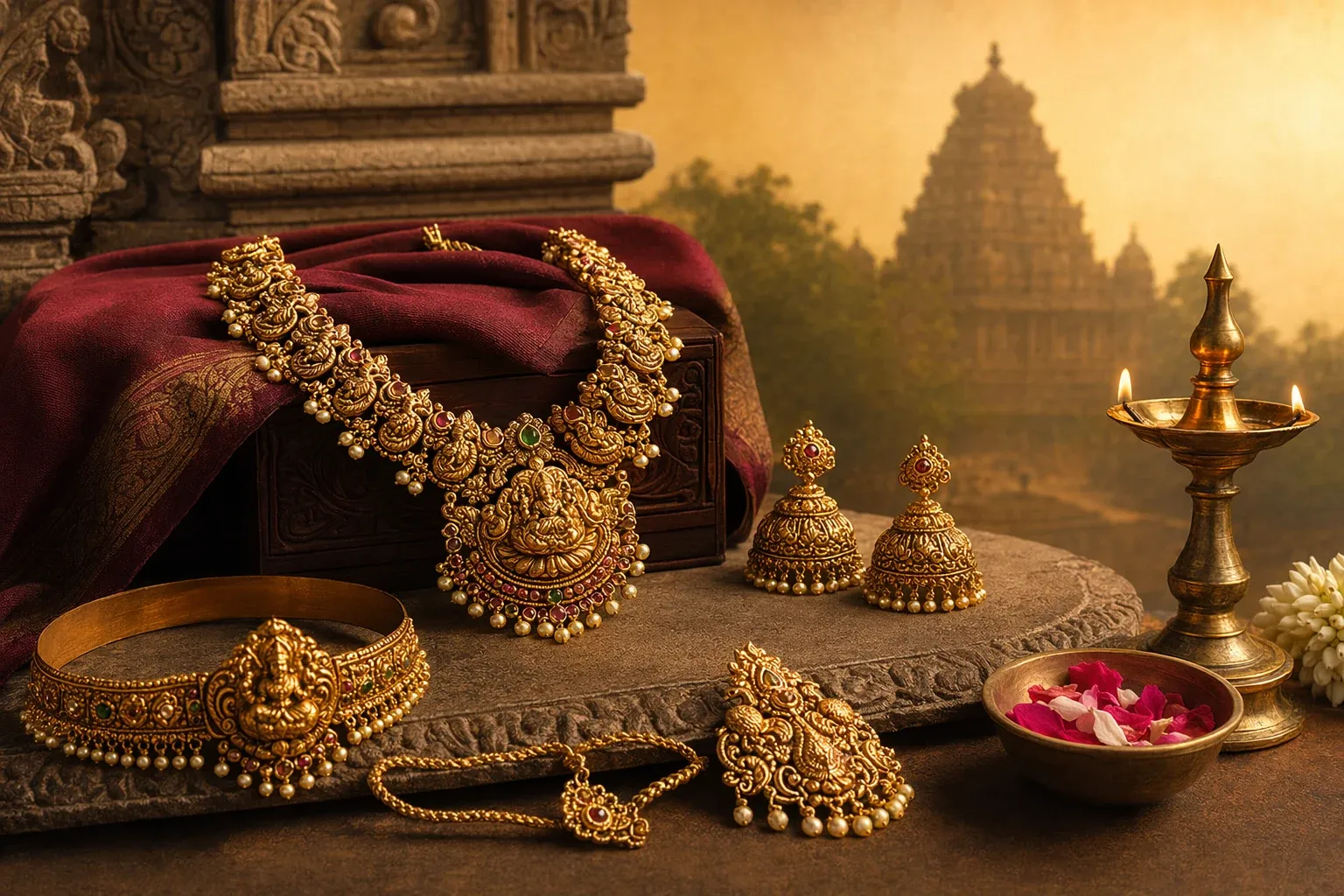
Temple jewellery can look dramatic at first glance: gold tones, goddess motifs, red and green stones, layered necklaces and matching head pieces. But the style becomes much easier to understand when you see it as a meeting point of devotion, South Indian craft, classical dance costume and temple-inspired art. This guide explains what “temple jewellery” means, why its motifs matter, and how to appreciate it respectfully today.
For the wider jewellery map, start with What Is Traditional Indian Jewellery? A Beginner Guide, Types of Indian Jewellery Explained Simply, and Indian Classical Dance Costumes, Dress, Makeup, and Ghungroos Explained so temple jewellery feels connected to everyday ornament names, body placement, and performance costume rather than sitting as an isolated style.
Temple jewellery in one simple idea
Indian temple jewellery is a style of ornament that borrows its visual language from Hindu temples, deity adornment, South Indian courtly taste, and classical dance costume. When people hear the phrase today, they often imagine a rich gold necklace with Goddess Lakshmi at the centre, rows of kemp stones, mango shapes, peacocks, lotuses, elephants, bells, and matching earrings. That picture is not wrong, but it is only the beginning. Temple jewellery is not just jewellery that looks “traditional”. It is jewellery that carries a memory of worship, sculpture, performance, and regional craftsmanship.
The word “temple” matters because many designs echo how deities were adorned in temples and how temple architecture framed sacred beauty. In Indian thought, ornament is not always mere decoration. Alamkara, or adornment, can express respect, auspiciousness, beauty, devotion, social identity, and celebration. A necklace placed on a deity, a dancer’s head ornament, and a bride’s wedding set may belong to different settings, but they can share the same visual family.
Where the style is most strongly rooted
Temple jewellery is especially associated with South India, including Tamil Nadu, Karnataka, Andhra Pradesh, Telangana, and Kerala. Historical discussions often connect it with temple patronage, royal support, goldsmith communities, and the world of dance and ritual. The Chola period is remembered for bronze icons, temple building, and a sophisticated sacred-art culture; later South Indian kingdoms and local patrons also shaped jewellery tastes. It is safer, however, to speak of a long evolving tradition rather than one single invention date.
A useful example is Vadasery near Nagercoil in Tamil Nadu, often mentioned in connection with traditional dance jewellery. Bharatanatyam dancers still wear sets that include head pieces, earrings, necklaces, waist belts, bangles, and sometimes armlets, arranged to make the body readable on stage. The ornaments catch light, frame the face, and help the audience see the dancer’s neck, eyes, hands, and posture. So temple jewellery sits at the meeting point of devotion and performance.
Motifs that make temple jewellery recognisable
The most familiar motif is Lakshmi, usually shown seated on a lotus and linked with prosperity, grace, and auspicious beginnings. You may also see Ganesha, peacocks, parrots, elephants, yali-like creatures, lotus petals, mango shapes, conch forms, temple arches, bells, and coin-like units. Some pieces use the kirtimukha face or patterns that feel close to carved pillars and gopuram ornament. These motifs do not all mean the same thing in every region, but they create a devotional and ceremonial mood.
The mango motif, called manga in parts of South India, is common in necklaces such as manga malai. Peacocks bring royal and divine associations, especially with Kartikeya or Murugan in southern contexts. Elephants may suggest strength, royalty, or Gajalakshmi imagery. The lotus is linked with purity and divine presence. When reading motifs, it is best to stay humble: a design may be symbolic, decorative, regional, or all three.
Gold, kemp stones, pearls, and modern versions
Older and high-value temple jewellery could use gold, rubies, emeralds, diamonds, pearls, and other precious materials. In dance use, many sets are made in gold-plated silver or other bases so that the pieces are stage-friendly, matched, and easier to maintain. Kemp stones, often red and green glass or imitation stones in modern dance jewellery, give the classic Bharatanatyam look. The value of a piece therefore depends not only on the look, but on metal, stones, workmanship, age, provenance, and use.
This distinction is important because the market uses the word “temple jewellery” very widely. A fashion necklace with a Lakshmi pendant, a handcrafted silver-gold-plated dance set, a family heirloom, and a museum object are not the same thing. Some are devotional, some are bridal, some are costume pieces, and some are collector-level works. A respectful beginner should ask what the piece is made of, who made it, what tradition it belongs to, and whether it is meant for dance, worship, wedding wear, or everyday styling.
The Bharatanatyam connection
For many readers, the easiest place to see temple jewellery as a complete system is Bharatanatyam. A dancer may wear a chandra and surya on the head, a central forehead ornament, earrings with chains, short and long necklaces, a waist belt, bangles, anklets, and hair ornaments. These are not random accessories. They frame the dancer’s body and make abhinaya, mudra, and movement more visible. The jewellery helps turn the stage body into a storytelling body.
This does not mean temple jewellery belongs only to dancers. Brides, classical musicians, devotees, and modern fashion lovers also wear versions of it. But the dance connection explains why matched sets are so common and why red-green-gold combinations feel familiar. It also teaches a nice lesson: ornament can be practical. It can help an audience see form, rhythm, character, and sacred mood.
How to wear it without reducing it to a costume
Temple jewellery can look powerful with silk sarees, Kanjeevaram borders, lehengas, half-sarees, and even carefully balanced contemporary outfits. The key is proportion. A heavy Lakshmi choker with big jhumkas may not need five more statement pieces. A single pendant can work beautifully with a plain kurta. If the piece carries deity imagery, avoid treating it as a joke prop or wearing it in a setting that feels disrespectful to you or your family tradition.
Also remember that Indian jewellery traditions are living. They change with dance schools, weddings, film styling, diaspora fashion, artisans, and budgets. Respect does not mean freezing them in the past. It means knowing that the gold-coloured necklace on a shopping page may be connected to temples, dancers, craftsmen, brides, and families across generations.
A grounded way to remember it
Temple jewellery is Indian sacred art made wearable. It has roots in South Indian visual culture, grows through deity motifs and dance practice, and continues through weddings, performances, and modern styling. Its beauty is not only shine. It is the way a lotus, a Lakshmi pendant, a peacock, a waist belt, or a line of red stones can carry memory from temple walls to the human body.
Common questions
What is Indian temple jewellery?
Indian temple jewellery is a style inspired by temple deity adornment, South Indian sacred art, classical dance costume, and auspicious motifs such as Lakshmi, lotus, peacock, elephant, mango and bells.
What kind of jewelry is India known for?
India is known for many jewellery traditions, including temple jewellery, Kundan, Polki, Meenakari, Thewa, silver tribal jewellery, bridal gold sets, jhumkas, bangles, anklets and regional head ornaments.
What is traditional Indian jewelry?
The motifs often connect with auspiciousness, devotion, prosperity, dance visibility and regional identity. For example, Lakshmi suggests prosperity, while lotus and peacock motifs bring sacred and royal associations.