
If you searched for 'what vedas say about god', this guide is for you. We will keep it simple, respectful, and beginner-friendly.
Related reader questions behind this guide include: are vedas monotheistic, what vedas say about idol worship, are vedas real, are vedas mythology.
Quick answer
The Vedas speak in a layered way about divine reality. They praise many devas such as Agni, Indra, Varuna, Soma, Usha, and others, while also giving hints of a deeper unity behind the many names.
A famous Rigvedic line is often translated as “Truth is one; sages call it by many names.” This should be understood carefully, not as a quick social-media slogan.
Who are the devas?
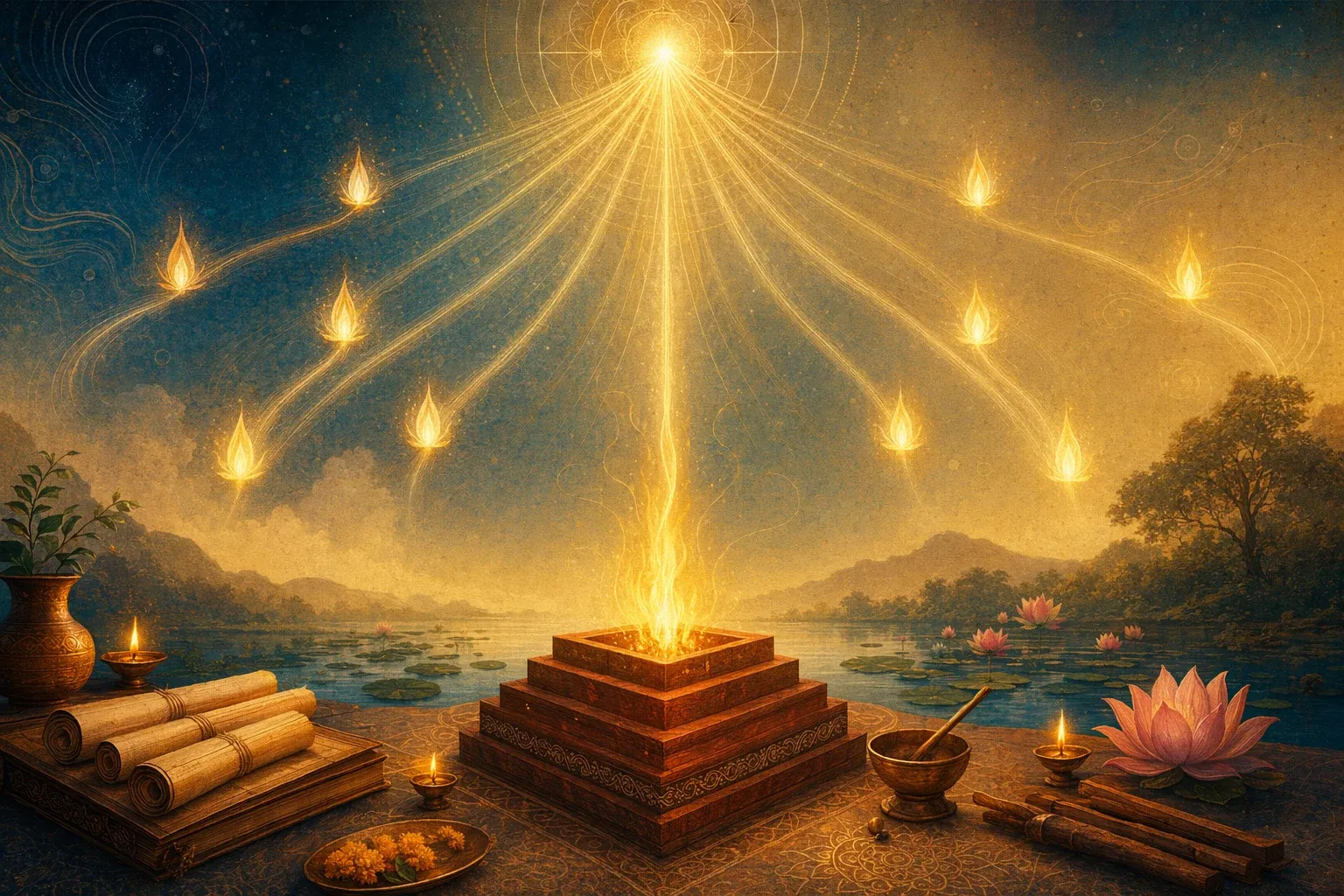
Devas in the Vedic world are luminous divine powers connected with fire, storm, dawn, order, speech, healing, and other cosmic realities. They are not just “characters”; they are part of a sacred way of seeing the universe.
Agni, for example, is fire and also a divine messenger in ritual. Usha is dawn and also a poetic presence of beauty and renewal.
Is the Vedic view monotheistic or polytheistic?
Modern labels like monotheism and polytheism can help a little, but they can also oversimplify. Vedic hymns often praise one deity with complete devotion in that moment, while the larger tradition allows many divine names and forms.
Some scholars use terms like henotheism for this pattern, but beginners do not need to get stuck in labels. The safer answer is: Vedic divine language is rich, poetic, and multi-layered.
One truth, many names
Rigveda 1.164.46 is often discussed because it says the real or truth is one, and sages speak of it in many ways. This verse is important, but it does not erase the role of the devas or make all traditions identical.
It suggests that Vedic thought could hold unity and diversity together: many names, many forms of praise, and a search for deeper reality.
What about idol worship?
The early Vedic world is strongly connected with yajna, fire ritual, mantra, and offering. Later Hindu temple worship with murtis developed in different historical forms over time.
So it is too simple to ask, “Do the Vedas support idol worship?” as if the entire later Hindu world must be squeezed into one yes-or-no line. Vedic ritual and later temple devotion are connected parts of a long tradition, but they are not identical in form.
A helpful next step is Does Jainism Believe in God? Worship, Prayer, and Liberation Explained Simply and A Guide to Worship-Rituals and Offerings for Lord Brahma.
Beginner takeaway
The Vedas invite readers into reverence for divine powers, cosmic order, sacred sound, and ultimate truth. They do not fit neatly into one modern label.
A respectful reader should avoid mocking either Vedic ritual or later murti worship. Both have deep meanings in their own contexts.