
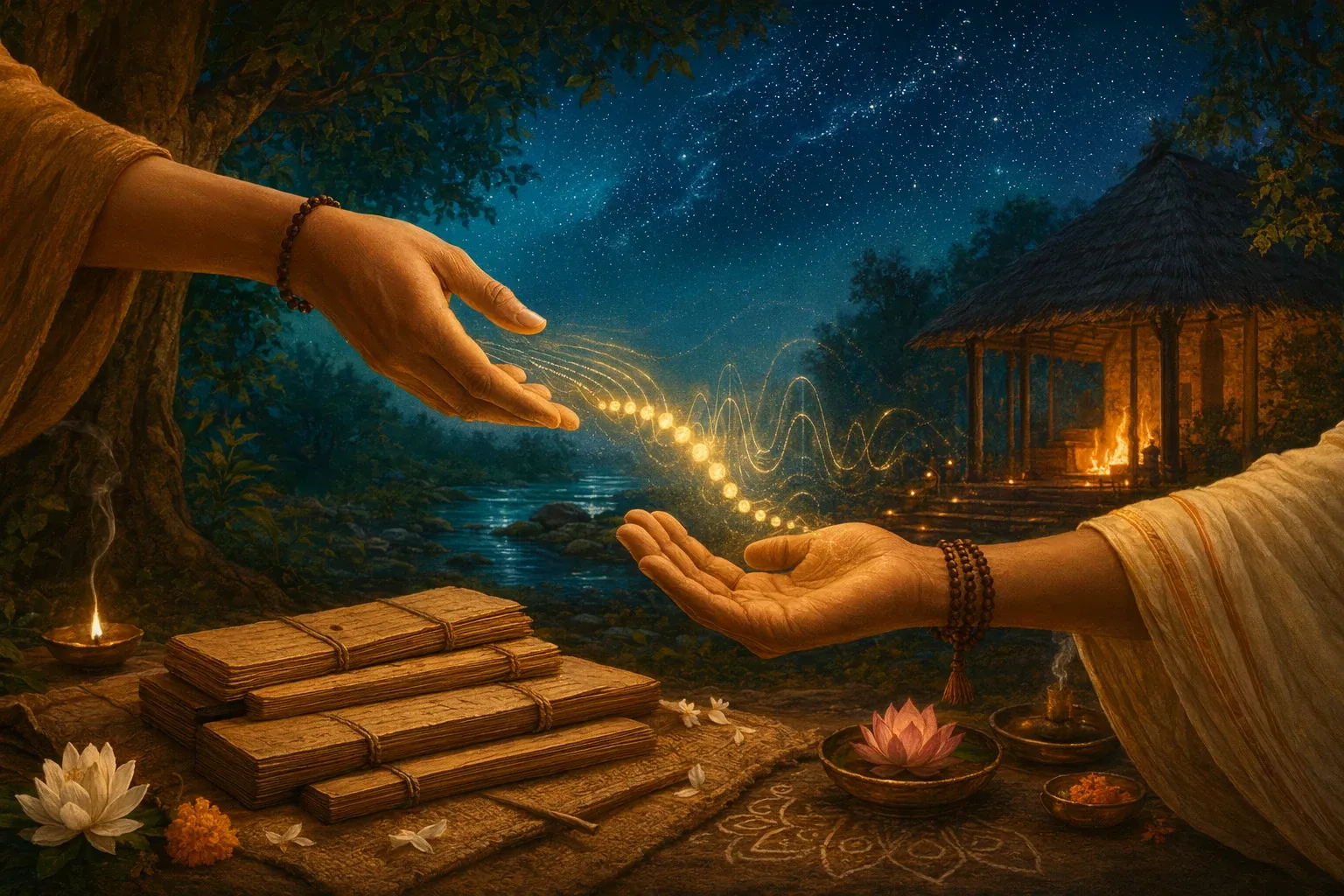
If you searched for 'who wrote vedas', this guide is for you. We will keep it simple, respectful, and beginner-friendly.
Related reader questions behind this guide include: vedas who wrote, who has written vedas, who wrote vedas first, are vedas written by god, why vedas are called apaurusheya.
Quick answer
In Hindu tradition, the Vedas are not treated as the work of one human author. They are called Shruti, “that which was heard,” and are often described as Apaurusheya, meaning not of human authorship.
The rishis are traditionally understood as seers who heard, realised, or received the Vedic mantras and passed them through oral teaching.
Why the question is tricky
When we ask “who wrote the Vedas?” we are using a modern book-world question. Modern books usually have authors, dates, editors, publishers, and printed copies. The Vedas come from a much older oral world.
For a long time, Vedic knowledge was preserved by listening, memorising, reciting, correcting, and teaching. Writing came later as manuscript culture developed.
What does Shruti mean?
Shruti means “heard.” In Hindu categories, Shruti has the highest sacred status and includes the Vedas. The word points to revelation and transmission through hearing.
This does not mean beginners must ignore history. It means we should understand the tradition on its own terms before forcing it into a modern author model.
What does Apaurusheya mean?
Apaurusheya means not produced by a person. In many Hindu philosophical traditions, this protects the sacred authority of the Vedas: they are not seen as someone’s personal opinion or invention.
Different schools explain this idea in different ways. A simple beginner version is: the Vedas are revered as timeless sacred knowledge that rishis perceived and preserved.
What role did rishis play?
Rishis are not ignored in Vedic tradition. Many hymns are connected with particular seer lineages. They are honoured because they carried, realised, and transmitted the mantras.
So the careful answer is not “nobody was involved.” It is that rishis are remembered as seers and transmitters, while the Vedas themselves are traditionally not treated as ordinary human-authored literature.
A helpful next step is Are the Vedas Shruti or Smriti? Simple Meaning of Sacred Text Categories and Can Anyone Read the Vedas? Women, Caste, and Learning Today.
A respectful modern way to say it
For school or beginner use, you can say: according to Hindu tradition, the Vedas are Shruti and Apaurusheya; they were revealed to or realised by rishis and preserved orally over generations.
This answer respects tradition and avoids the false claim that one named person sat down and wrote all four Vedas like a modern textbook.