
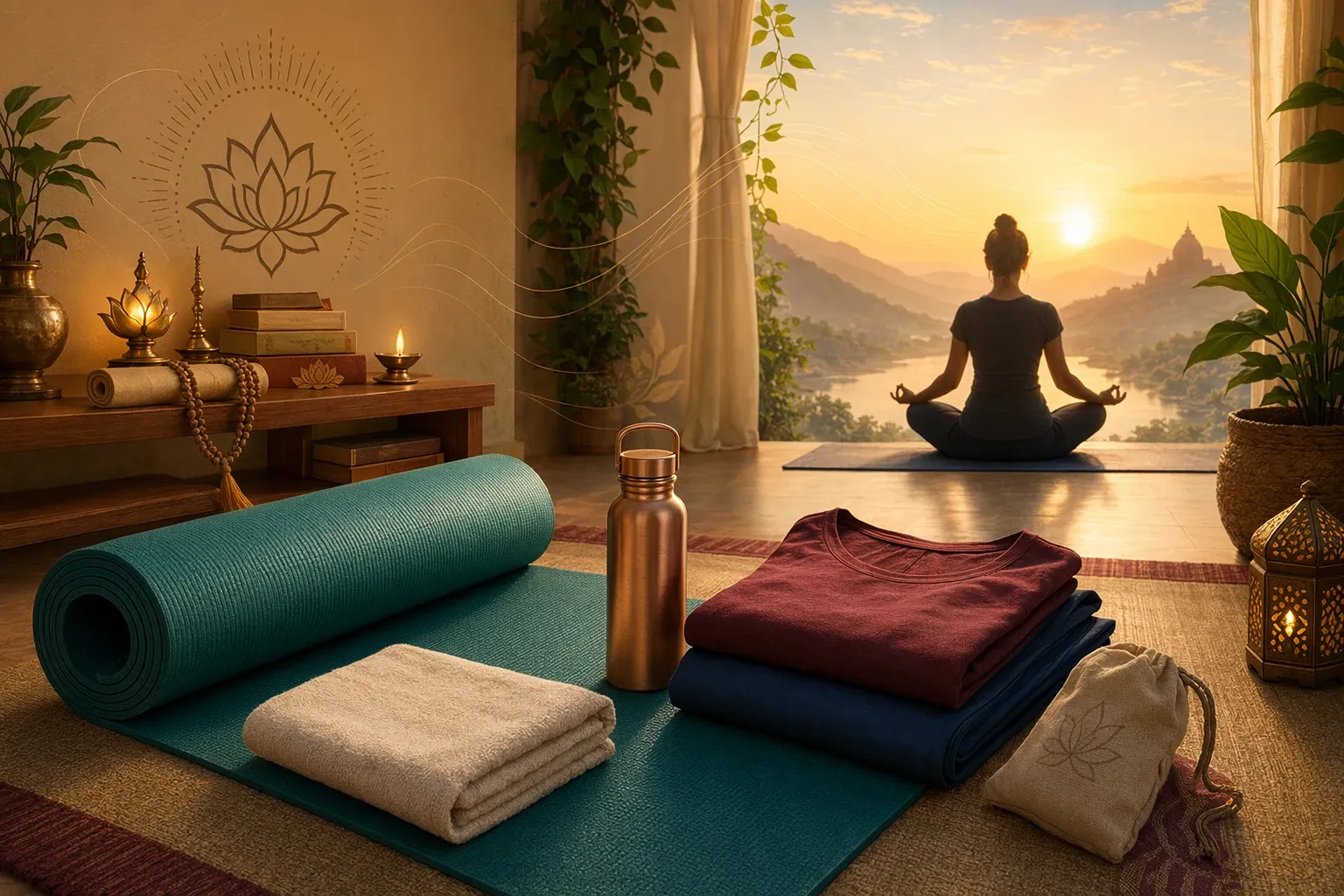
If you searched for 'which yoga mat is best', this Bhaktilipi guide gives you a simple, respectful starting point.
Reader questions behind this guide: Do beginners need a yoga mat?; Which yoga mat is best?; What should you wear for yoga?.
The aim is beginner-friendly clarity: Indian cultural context, practical usefulness, and careful language without unsupported miracle claims.
Quick answer
For yoga, you mainly need comfortable clothes, a safe space, and guidance. A yoga mat is useful for grip and cushioning, but beginners do not need the most expensive one.
Start simple. If your setup helps you practice safely and regularly, it is good enough.
Do you need a mat?
A mat helps prevent slipping, marks your practice space, and gives some cushioning for knees, hands, and back. On a slippery floor, it can be important for safety.
If you are only doing seated breathing or very gentle movement, a folded blanket may work for some practices. For standing poses, grip becomes more important.
Grip, thickness, and material
A beginner mat should have decent grip, enough thickness for comfort, and a material you can clean easily. Very thin mats may hurt knees; very thick soft mats may feel unstable in balancing poses.
Material choices vary: PVC, TPE, rubber, cotton, jute, and blends. Each has cost, grip, durability, and care differences. If you have allergies, check material details before buying.
What to wear
Wear clothes that let you move and breathe comfortably. They do not need to be fashionable, branded, or tight. The main point is that they should not restrict movement or make you feel distracted.
Traditional modesty, personal comfort, and local context can all guide clothing choices. Yoga should not become a fashion-pressure zone.
Low-cost beginner setup
A basic mat, water nearby, a towel, and enough space around you are enough for most beginner home practice. Blocks, straps, bolsters, and cushions can help, but you can add them later if needed.
Do not overspend before you know your practice style. A sincere five-minute routine on a simple mat is better than an expensive setup that is never used.
Cleaning and care
Wipe your mat after sweaty practice, let it dry properly, and store it away from dust and harsh sunlight unless the care instructions say otherwise.
Clean equipment is part of respect: respect for the body, the practice space, and anyone else who may use the mat.
To connect this with nearby ideas, see Can Yoga Help With Weight Loss? The Honest Beginner Guide and How to Start Yoga at Home: A Beginner-Friendly Roadmap.