
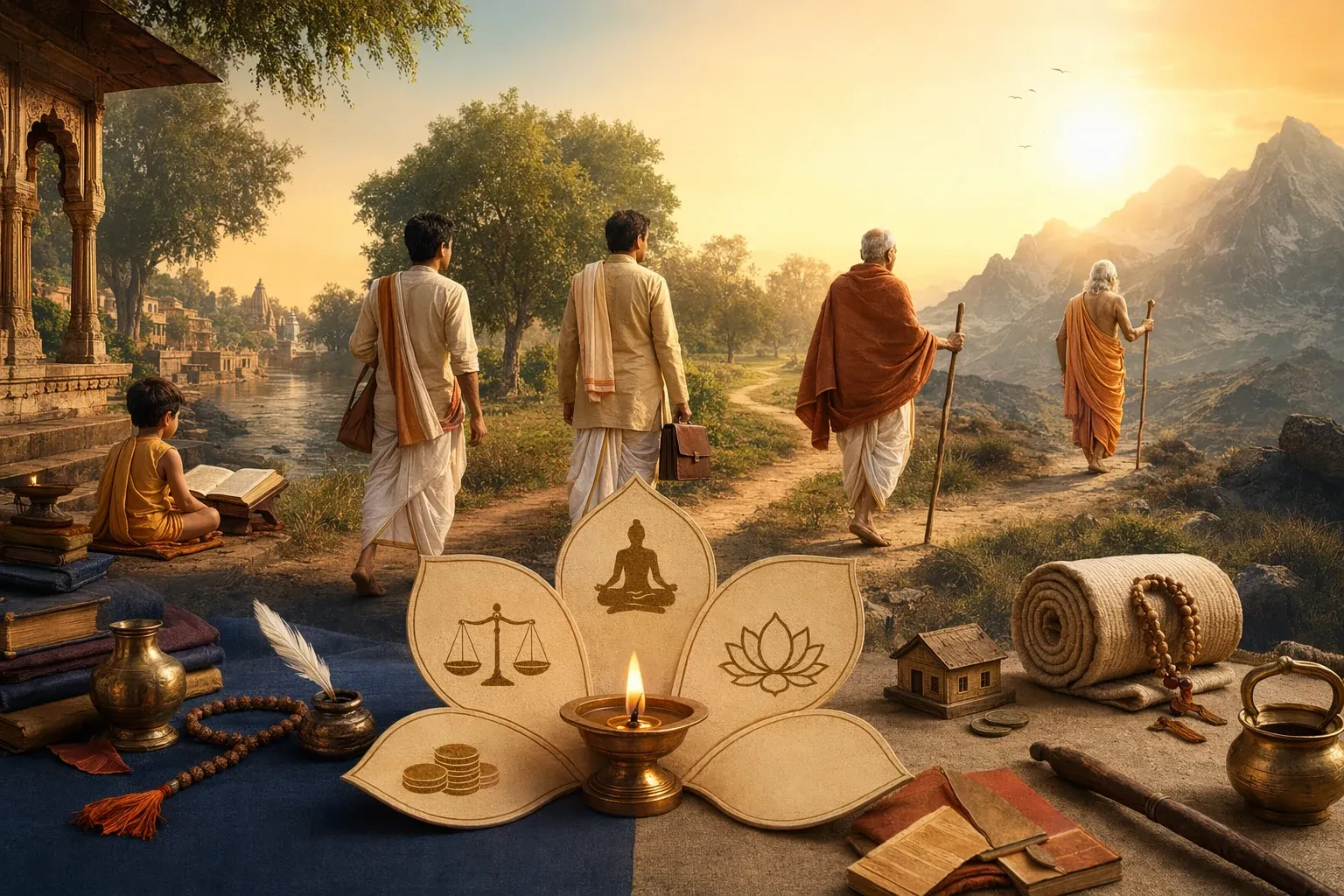
The ashrama system and the purusharthas are two important Hindu frameworks for understanding human life. The ashramas describe broad life phases: brahmacharya, grihastha, vanaprastha, and sannyasa. The purusharthas describe major human aims: dharma, artha, kama, and moksha. When the two are read together, they form a balanced life map.
The ashrama system answers the question, “What kind of responsibility belongs to this part of life?” The purusharthas answer the question, “What goals should a human being pursue?” Their connection matters because Hindu thought does not treat all goals as equally urgent at every moment. Learning, wealth, pleasure, duty, and liberation each need the right context.
The four purusharthas in simple language
Dharma means moral order, duty, right conduct, and the principle that helps life stay truthful and balanced. It is not only religious rule; it includes responsibility toward family, society, nature, and the self. For a fuller introduction, see What Is Dharma?.
Artha means material support, livelihood, resources, skill, influence, and practical security. It is not condemned when pursued ethically. Without artha, families and communities can suffer.
Kama means desire, enjoyment, affection, beauty, art, and emotional fulfillment. It includes the human need for joy and relationship, not only sensual pleasure.
Moksha means liberation. It points to freedom from ignorance, ego, and bondage. Moksha asks the deepest spiritual question: who am I beyond temporary roles and cravings?
Why the ashramas need the purusharthas
If the ashrama system is read without the purusharthas, it can sound like a simple age chart. But the connection with the four aims gives it philosophical depth. Each ashrama trains a person to relate differently to duty, resources, enjoyment, and liberation.
Brahmacharya gives priority to discipline and learning. Grihastha gives more room to artha and kama, but under the guidance of dharma. Vanaprastha reduces attachment to possession and status, turning attention toward wisdom. Sannyasa places moksha at the center.
This does not mean dharma disappears in one phase or moksha is irrelevant until the end. Dharma should guide all of life, and the search for truth can begin early. The point is emphasis. A student and a renouncer both value truth, but their daily responsibilities differ.
Brahmacharya and the foundation of dharma
The student life teaches restraint, respect, and attention. These habits prepare a person to pursue later goals without being controlled by them. Artha without discipline can become greed. Kama without self-knowledge can become addiction. Learning without humility can become pride.
Brahmacharya therefore creates the foundation for dharma. It trains the mind to ask whether a desire is wise, whether a gain is ethical, and whether a pleasure strengthens or weakens character. In this sense, the first ashrama protects the later pursuit of artha and kama.
Grihastha and the ethical use of artha and kama
The householder life is where artha and kama become especially active. A householder earns, builds a home, shares affection, raises children in many cases, offers hospitality, and supports society. Hindu thought does not reject these aims. It places them within dharma.
This is the key connection. Wealth is not wrong when gained honestly and used responsibly. Pleasure is not wrong when it respects dignity, commitment, and moderation. Household life becomes spiritual when ordinary duties are performed with truthfulness and generosity.
The grihastha is also expected to support people outside the household path. Teachers, guests, students, elders, and renouncers may all depend on household generosity. So artha is not merely private property; it becomes a means of service.
Vanaprastha and the turning of desire
Vanaprastha marks a gradual turning. The person has known family duty, social effort, and worldly achievement. Now the question changes: what remains when ambition becomes less important? This ashrama does not insult earlier goals. It asks a mature person to loosen attachment to them.
Artha and kama may still exist, but they no longer define identity. Dharma becomes more contemplative, and moksha becomes more visible. The person may study, advise, travel for pilgrimage, simplify possessions, and spend more time in reflection.
Sannyasa and the priority of moksha
Sannyasa places liberation above all other aims. The renouncer gives up ordinary claims in order to seek truth directly. This is the most radical expression of moksha. It says that even honorable social identity is not the deepest self.
Yet sannyasa is not meant to make earlier life meaningless. The earlier ashramas prepare the person to renounce with maturity rather than escape. Without discipline, duty, and self-knowledge, renunciation can become another form of ego.
The balance created by the two systems
Together, ashrama and purushartha prevent extremes. They do not say pleasure is evil. They do not say wealth is the highest goal. They do not say family duty is everything. They do not say liberation excuses irresponsibility. Instead, they arrange life so each aim can be honored without becoming destructive.
For beginners, this is the most useful takeaway: the ashramas describe the changing responsibilities of life, while the purusharthas describe the goals that need wise balance. Their connection teaches that a good life is not one-dimensional. It needs learning, ethical action, affection, practical support, social care, contemplation, and freedom.
Why this connection helps beginners
Beginners often learn the ashramas and purusharthas as two separate lists. That can make both seem dry. The connection makes them practical. It shows why a person should not chase pleasure without duty, wealth without ethics, study without humility, or renunciation without preparation.
The pairing also helps explain why Hindu thought can honor both household life and spiritual freedom. A householder may pursue livelihood and affection in a dharmic way. A renouncer may leave those pursuits for moksha. Neither is meaningless when placed in the right context. The wisdom lies in knowing which goal should lead, which should support, and which should be gently released as life matures.