
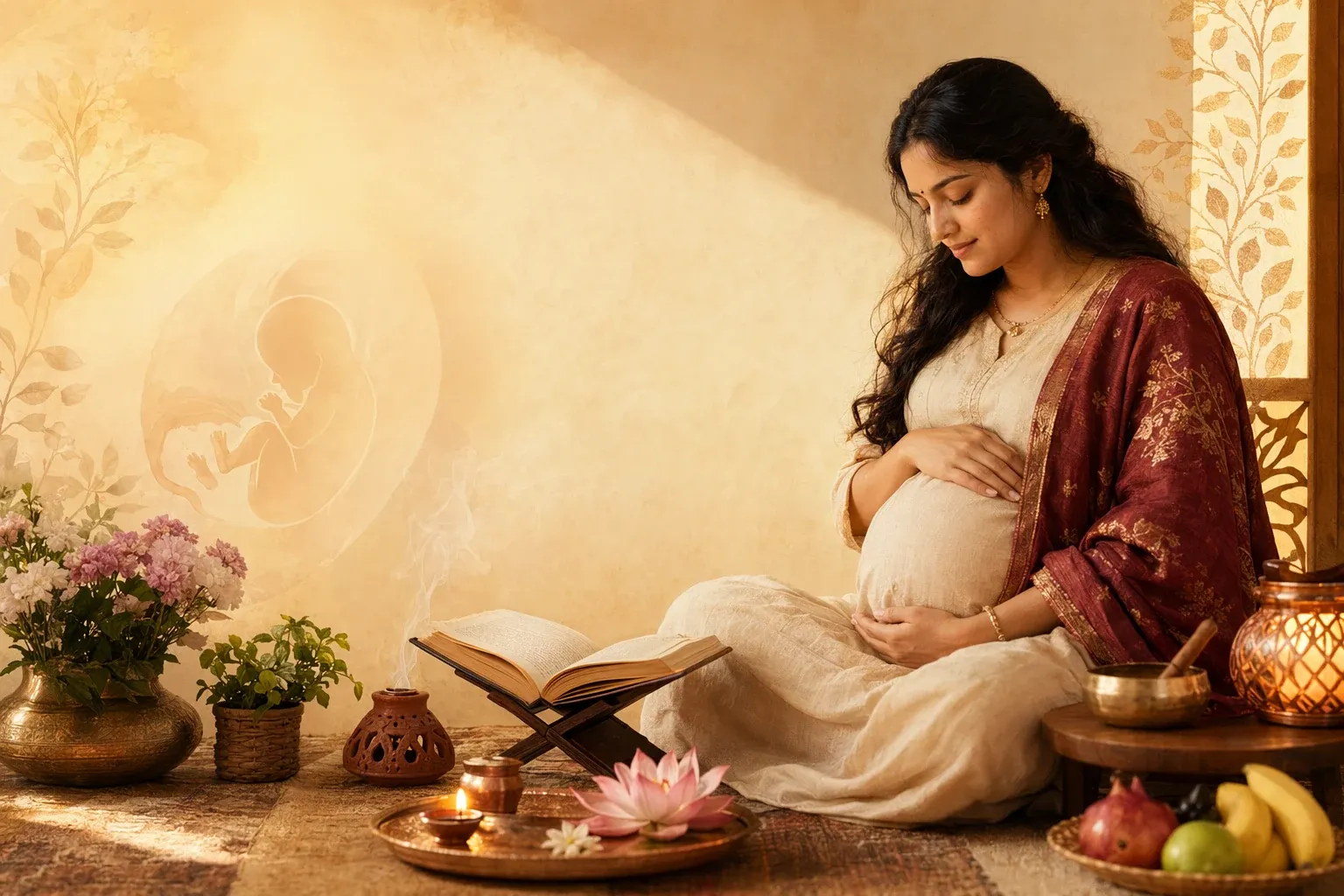
Garbha Samskara is a traditional Hindu idea about caring for the mother, the unborn child, and the home environment before birth. In everyday use, people often describe it as a pregnancy tradition built around calm conduct, prayer, uplifting sounds, wise reading, family support, and respect for the child growing in the womb.
It is important to begin with a clear boundary: Garbha Samskara is a cultural and spiritual practice, not a medical treatment. It should never replace prenatal checkups, prescribed medicines, mental-health support, nutrition advice, or emergency care from qualified medical professionals. If you are pregnant or supporting someone who is pregnant, use tradition as comfort and connection while taking health questions to doctors, midwives, or other licensed caregivers.
For the broader meaning of samskara beyond pregnancy tradition, read What Is Samskara? Meaning in Hinduism, Yoga, and Daily Life.
What Garbha Samskara means
The word garbha means womb, embryo, or pregnancy context. Samskara is a layered Sanskrit word connected with refinement, formation, impression, and life-cycle rites. Put together, Garbha Samskara points to the traditional idea that the period before birth can be treated with care, discipline, affection, and sacred attention.
In many modern Indian families, the phrase is used broadly. It may refer to prenatal prayers, devotional music, mantra listening, reading from sacred or inspiring texts, gentle conversations, positive family conduct, and the effort to keep the mother’s surroundings peaceful. Classical Hindu lists more often name specific prenatal samskaras such as Garbhadhana, Pumsavana, and Simantonnayana, while “Garbha Samskara” is commonly used today as an umbrella phrase for pregnancy-related cultural nurturing.
How it fits into the samskara tradition
Samskaras are rites or formative practices that mark important transitions in life. They are not only ceremonies; they are also reminders that human life is shaped by habit, memory, family teaching, and social responsibility. Birth, naming, learning, marriage, and final rites are all treated in many Hindu traditions as moments that deserve dignity and attention.
Garbha Samskara belongs to this wider way of thinking. Before the child is born, the family is invited to treat pregnancy as a meaningful stage, not merely a private biological event. The focus is on reverence, restraint, care for the mother, and a hopeful atmosphere around the coming child. Different families express this in different ways, and no single household practice can be treated as compulsory for everyone.
Practices commonly associated with it
Common Garbha Samskara practices are usually gentle and domestic. A family may set aside time for prayer, chant familiar mantras, listen to devotional songs, read the Bhagavad Gita or other revered literature, speak kindly at home, maintain a steady daily rhythm, and invite elders to bless the mother and child. Some families also connect the practice with Ayurveda-influenced food habits, but health decisions during pregnancy should be reviewed with medical professionals.
The best way to understand these practices is as meaning-making. A lullaby, a mantra, or a passage from scripture does not need to be presented as a guaranteed way to create a particular kind of child. The safer and more respectful explanation is that such practices help families express love, reduce harshness in the home, and remind everyone to support the pregnant person with patience.
What it is not
Garbha Samskara should not be used to make exaggerated claims about intelligence, personality, disease prevention, or guaranteed outcomes. It should not become a burden placed on pregnant women, as if every emotion or difficulty will harm the child. Pregnancy can include fatigue, anxiety, grief, illness, family stress, or complicated medical needs. None of these should be met with blame.
A balanced approach is simple: allow cultural practices that bring peace, belonging, and devotion, but keep medical care separate and respected. If a song calms the mother, that is valuable. If a family prayer creates support, that is meaningful. If there is bleeding, severe pain, high blood pressure, depression, fever, reduced fetal movement, or any other health concern, that is a medical matter requiring timely professional advice.
Garbha Samskara in Telugu and other languages
In Telugu, people may write or say Garbha Samskara as గర్భ సంస్కారం, often pronounced close to “garbha samskaram” or “garbha sanskaram.” The wording can vary because Sanskrit terms move through regional languages in slightly different ways. Hindi and Marathi speakers may commonly say “Garbh Sanskar,” while English-language articles often use “Garbha Samskara.”
The difference in spelling does not change the basic idea. The phrase points to prenatal cultural nurturing: care of the mother, reverence for life before birth, and the belief that family conduct during pregnancy matters. Local custom, family lineage, language, and community practice can all shape the exact rituals used.
Which samskara relates to pregnancy?
If someone asks which samskara is performed before birth, the answer depends on the list being used. Traditional lists often include Garbhadhana as a pre-conception rite, Pumsavana during early pregnancy, and Simantonnayana later in pregnancy. In current popular language, Garbha Samskara is often used as the broader pregnancy tradition that gathers these ideas of prenatal care, prayer, and auspicious conduct.
Because names vary, beginners should not worry too much about memorizing one fixed label. The main point is that Hindu life-cycle thinking includes the period before birth within a larger moral and spiritual map. It asks families to welcome life carefully and to support the mother with respect.
A practical way to follow it today
A sensible modern approach can be modest. Keep prenatal appointments. Follow professional medical advice. Ask for help with food, rest, transport, and household work. Add prayer, music, reading, or meditation only if it genuinely supports the mother and does not create pressure. Let the practice make the home kinder rather than stricter.
Families can also adapt the tradition ethically. A mother may prefer quiet instead of music. A family may use a regional song instead of Sanskrit chanting. Someone may choose a simple blessing rather than a formal ritual. These choices can still honor the spirit of Garbha Samskara when they protect dignity, consent, and care.
FAQs
What is Garbha Samskara?
Garbha Samskara is a traditional Hindu pregnancy-related idea about nurturing the mother and unborn child through a peaceful, respectful, and spiritually meaningful environment. It is cultural and devotional, not a substitute for medical care.
What is Garbha Samskara in Telugu?
In Telugu, it may be written as గర్భ సంస్కారం and pronounced close to “garbha samskaram.” It refers to the same broad idea of prenatal cultural and spiritual care.
Does Garbha Samskara guarantee a healthy or intelligent child?
No. It should not be presented as a guarantee of health, intelligence, personality, or future success. Pregnancy health questions belong with qualified medical professionals.
How is samskara connected with pregnancy?
Samskara is connected with shaping, refinement, and life transitions. In pregnancy, that idea becomes a call to support the mother, keep the home environment gentle, and welcome the unborn child with care.