
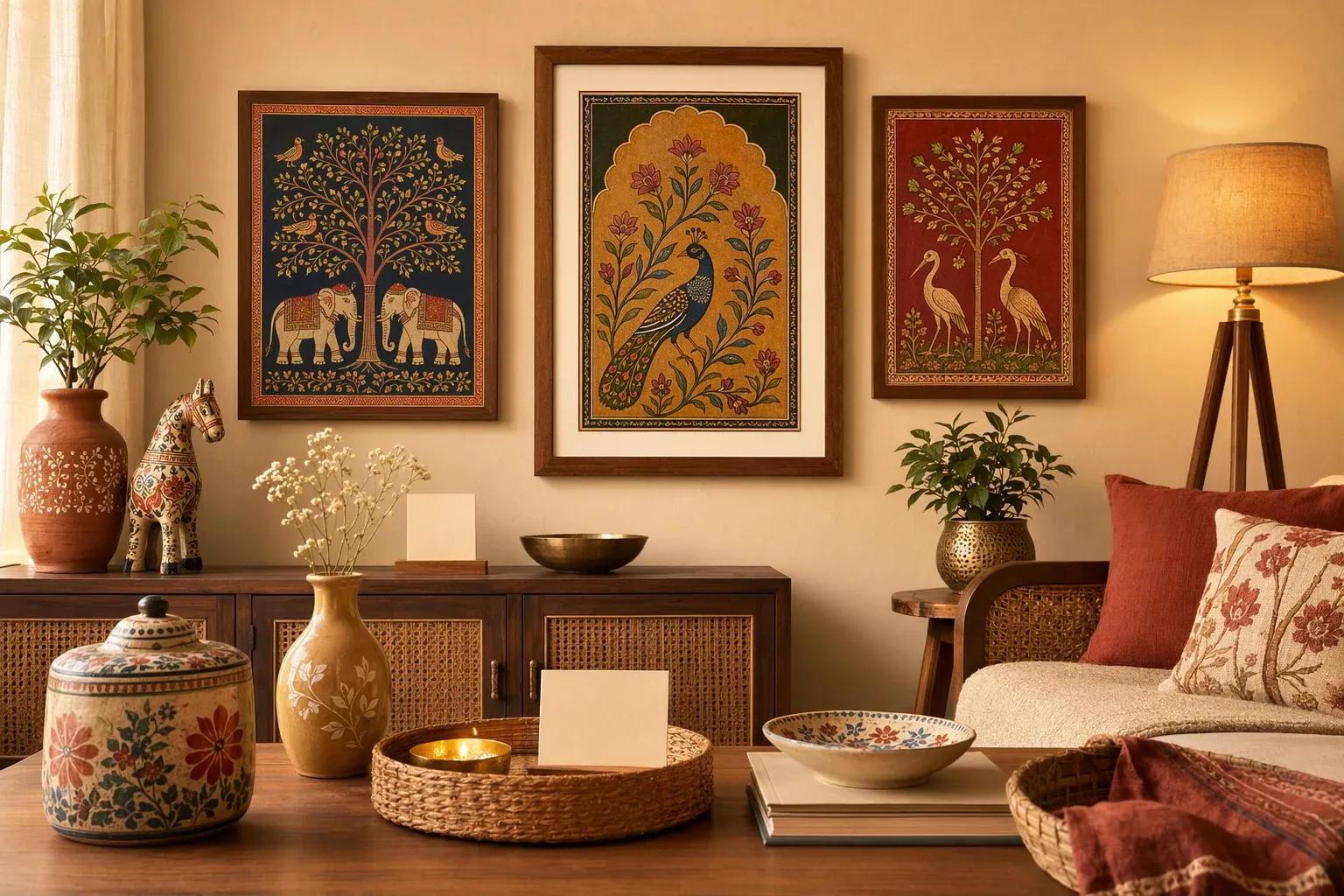
Indian folk art can bring warmth, story, and cultural depth into a home. This guide helps you choose and display it with care rather than treating it as a trend. This article introduces the subject in clear language for readers who want cultural context, visual clues, and practical appreciation.
Decor with memory, not just colour
Indian folk art can make a home feel warm, storied, and alive. A Madhubani fish painting, a Warli dance scene, a Gond tree, a Pattachitra panel, or a hand-painted textile can carry more than colour. It may hold regional memory, devotional association, seasonal celebration, or the labour of an artist family. Respectful decor begins by seeing the work as art with context, not as a surface pattern chosen only to match a sofa.
Begin with the maker
Before choosing a piece, ask who made it. Is the artist named? Is the region clear? Is the tradition identified accurately? Is it handmade, printed, or digitally reproduced? None of these answers automatically makes a piece good or bad, but they affect value and expectation. A signed handmade work by an artist deserves different care than a mass print inspired by folk motifs. Our guide to identify genuine folk art can help.
Choose a tradition that fits the room’s feeling
Different traditions create different moods. Warli can feel earthy, rhythmic, and spacious. Madhubani often feels abundant, colourful, and symbolic. Gond can feel vibrant, forest-like, and animated. Pattachitra can bring narrative detail and devotional richness. Kalamkari textiles may soften a room with flowing mythic lines. Choose by meaning and atmosphere, not only by colour palette. A piece feels more settled when its story suits the space.
Be careful with sacred images
Many Indian folk artworks include deities, ritual motifs, shrine forms, or auspicious symbols. Displaying them casually in bathrooms, near shoes, on floor cushions, or as table surfaces can feel disrespectful to people who hold those images sacred. If you choose devotional art, place it thoughtfully. A clean wall, prayer corner, study, or living area may suit it better. When unsure, choose nature, village life, animals, or abstract borders.
Do not turn every motif into a trend
A lotus, elephant, peacock, mandala-like circle, or tribal figure can be overused until it loses context. Trend-based styling often strips a motif of its source and repeats it across cushions, mugs, phone cases, and posters. A more respectful approach is quieter. Let one good artwork breathe. Add a small label, artist note, or story card. Give guests a chance to learn rather than only consume the look.
Size and placement
A detailed folk painting needs enough viewing distance and enough light. Small intricate works belong where people can come close: a hallway niche, reading corner, desk wall, or beside a bookshelf. Larger works can anchor a living room or dining wall. Avoid direct harsh sunlight, damp walls, and smoky kitchens unless the material is protected. Handmade paper, cloth, and natural pigments can be sensitive to light and moisture.
Framing and conservation
Use framing that protects without overpowering. Acid-free mounts, UV-protective glass, and a little breathing space can help works on paper last longer. Cloth pieces may need textile-friendly mounting. Avoid sticky tapes, lamination, and cheap frames that press directly against delicate surfaces. If the piece is valuable or fragile, consult a framer who understands handmade art. Care is part of respect.
Pairing folk art with modern interiors
Indian folk art does not need a fully traditional room. A Warli artwork can look beautiful in a minimal apartment. A Gond painting can enliven a modern study. A Madhubani piece can add warmth to a neutral wall; see our Madhubani painting guide for its visual language. The key is balance. Let handmade irregularity soften clean lines instead of forcing everything to match.
Avoid fake antiquing and vague labels
Be cautious with decor sold as ancient tribal style, temple ethnic print, or handmade heritage look without details. Vague labels often hide machine printing or borrowed motifs. Fake antiquing can make a new piece look old without honouring any real history. This does not mean you must only buy expensive art. It means you should prefer clear information: artist, place, material, method, and tradition.
Support living artists
Buying from artist collectives, craft fairs, trusted galleries, museum shops, or direct artist pages can support the people who sustain these traditions. If your budget is small, consider a modest original, a licensed print, or a workshop fee. Support is not only financial. Credit artists when you post photos, avoid copying designs for commercial use, and share reliable sources. A home can become part of a healthier art ecosystem.
Children’s rooms and learning corners
Folk art can be wonderful in children’s rooms when chosen thoughtfully. Animal scenes, village life, trees, birds, and festival motifs can invite storytelling. Add a small note about the region and artist so the child grows up seeing art as connected to people. Avoid placing sacred images where they may be stepped on, scribbled over, or treated as disposable decoration. Learning and care can begin early.
Mandala prints and folk art are not the same
Many decor listings mix mandala, boho, tribal, and folk art as if they mean the same thing. They do not. A mandala print may be beautiful, but it is different from a Warli painting or Pattachitra panel. If you are unsure, read our guide to mandala and folk art difference. Clear naming helps you choose better and prevents cultural flattening.
Create a small story wall
One lovely approach is a story wall with three pieces: a nature-based folk artwork, a family photograph, and a small text note about the artist or region. This arrangement keeps the art in conversation with memory rather than turning it into anonymous decor. You can also include a map pin, a festival card, or a book nearby. The goal is not clutter, but connection.
A home that listens
Respectful home decor asks the home to listen to the artwork. Where does the piece want space, light, quiet, and context? What story does it bring? Who should be credited? How can it be cared for over years? When these questions guide your choices, Indian folk art becomes more than a trend. It becomes a relationship with living traditions, handmade patience, and cultural memory.
Continuing the journey
For related reading, see identify genuine folk art. Let the next artwork you see become a patient conversation with region, maker, material, symbol, and use. Indian folk art rewards slow attention, and every careful question adds depth to the first moment of visual delight.