
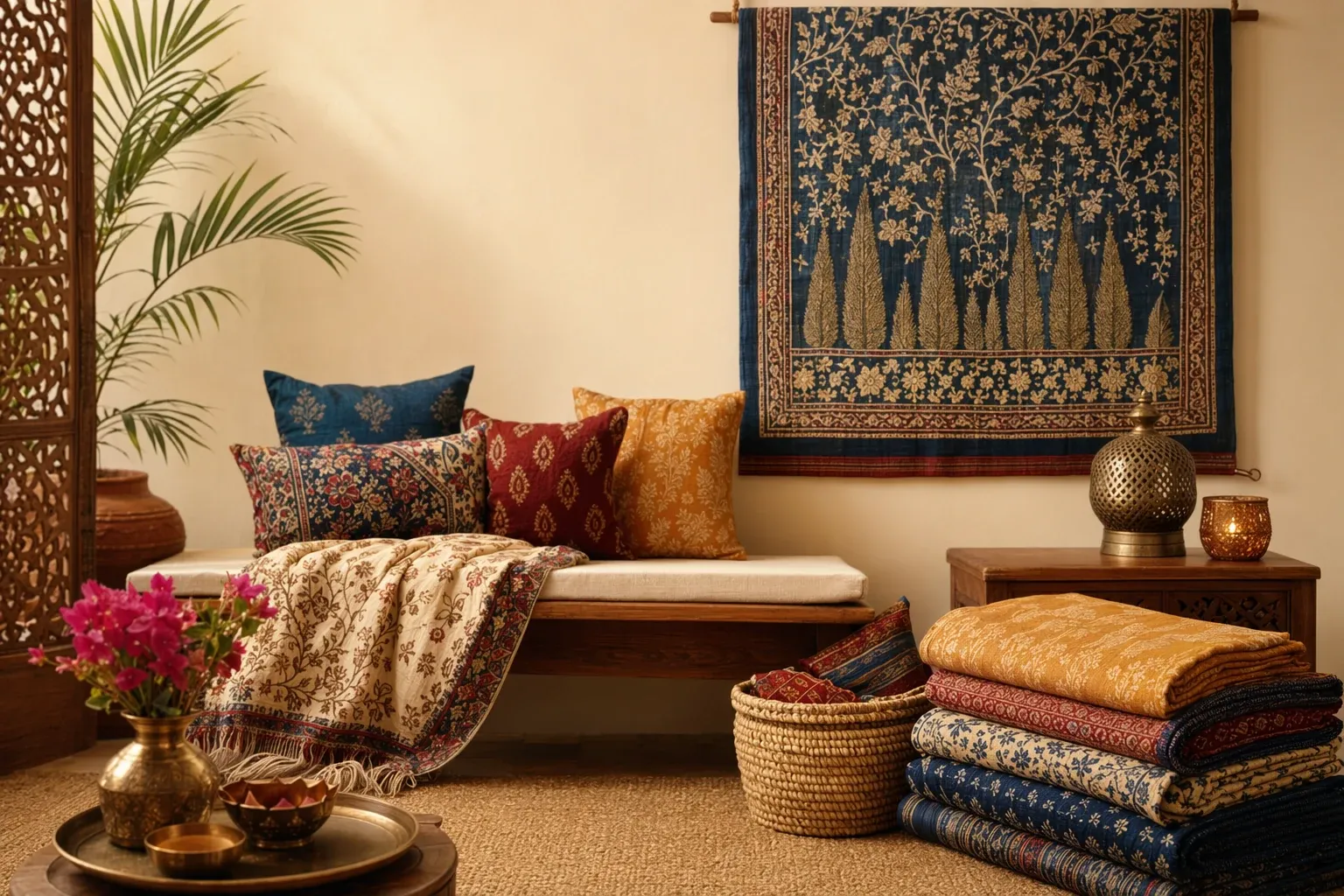
Indian textiles can change the feeling of a room more quickly than almost any other element. A Kantha throw softens a sofa. An Ajrakh cushion brings earthy geometry. A Phulkari panel fills a wall with sunlight. A handwoven rug anchors a reading corner. A Chikankari curtain filters light gently. Yet these textiles are not just decorative surfaces. They carry regional histories, household memories, ritual associations, and the labour of makers. Using them at home becomes more meaningful when beauty is joined with respect.
A respectful home does not need to look like a museum. It can be relaxed, modern, minimal, colourful, or eclectic. The difference lies in intention. Instead of buying random “Indian pattern” objects, you can learn what a textile is, where it comes from, how it was made, and whether its use suits the space. That knowledge changes the way you place, clean, and value the cloth.
Cushions and throws with a sense of place
Cushions are often the easiest entry point. Indian block prints, Ikat, mirror work, Kantha, brocade scraps, and handloom cottons can all become cushion covers. A plain room can take two or three patterned cushions without feeling crowded. If the sofa is already colourful, one strong textile paired with solids may work better.
Throws and quilts add warmth. Kantha quilts are especially loved because they combine softness with visible hand stitching. They can lie across a bed, sofa, bench, or reading chair. Older Kantha pieces may be delicate, so they should be used thoughtfully rather than dragged across rough surfaces. A textile can be part of daily life without being treated carelessly.
Wall textiles without flattening meaning
Wall hangings, framed fragments, embroidered panels, woven shawls, and appliqué cloths can bring craft into view. A Phulkari, Toda shawl, Kalamkari panel, Pattachitra-inspired cloth, or Rabari embroidery can hold a wall with more warmth than a printed poster. But before hanging any textile, consider whether it has ritual, community, or family significance.
Some cloths were made for sacred, ceremonial, or personal contexts. That does not mean they can never be displayed, but they deserve informed placement. Avoid using sacred imagery in casual or disrespectful areas. If a textile contains deities or ritual symbols, place it with dignity. For art comparisons across Indian traditions, Bhaktilipi’s guide to Pattachitra, Madhubani, and Kalamkari offers useful background.
Curtains, blinds, and filtered light
Light changes textile colour. A translucent Chikankari curtain can make a window feel calm and airy. Handloom cotton curtains can bring texture without heaviness. Block-printed curtains work well when the room has simple furniture. Heavy brocade or embroidered panels may be beautiful, but they are not always practical for strong sunlight, dust, or frequent washing.
Sun can fade natural dyes and weaken old fabric. If a textile is valuable or delicate, avoid direct harsh light. Use lining for curtains when needed. Rotate pieces over time. A home that loves textiles should also protect them from the very conditions that make rooms pleasant: sunlight, breeze, touch, and movement.
Table linen, runners, and festive settings
Indian textiles are wonderful for tables: hand-block printed cloths, woven runners, embroidered mats, and festive overlays. A small Bandhani runner can brighten a plain dining table. Kalamkari or Ajrakh patterns can create a grounded, earthy mood. For special occasions, brocade borders or zari-edged cloth can add ceremony.
Practicality matters here. Food stains, oil, turmeric, and repeated washing can affect fabric. Use washable textiles for everyday meals and reserve delicate pieces for lighter use. If a cloth is handmade, wash it gently according to fibre and dye. A beautiful table should not require anxiety, but it should encourage care.
Balancing pattern, colour, and quiet space
Indian textiles can be richly patterned, and that richness needs breathing room. If every cushion, curtain, rug, and bedcover competes, the room may feel restless. Choose a main textile and let other pieces support it. For example, an Ajrakh bedspread can pair with plain cushions in indigo, rust, cream, or black. A bright Phulkari wall panel may need a simple bench beneath it. A brocade cushion can shine against handloom linen.
Colour palettes can be drawn from the textile itself. Pick two or three tones and repeat them in smaller ways: a lamp base, clay pot, rug border, or book cover. This makes the room feel intentional without making it overly matched.
Old saris and family textiles
Many Indian homes hold saris, dupattas, shawls, or dhotis that are no longer worn but too meaningful to discard. They can be transformed into cushion covers, quilts, curtains, lampshades, framed panels, table runners, or garment bags. This can be a tender way to keep family memory visible.
Not every old textile should be cut. A rare weave, ceremonial sari, or emotionally important cloth may be better preserved whole. If you do repurpose a piece, save borders, pallus, and distinctive motifs carefully. Work with a tailor or craftsperson who understands fabric grain and fragility. A thoughtful transformation should feel like continuation, not loss.
Buying with fairness in mind
Home decor often hides labour. A cushion cover may be admired for colour while the maker remains unnamed. When possible, buy from artisan cooperatives, credible craft stores, museum shops, fair exhibitions, or sellers who can explain the textile. Ask whether it is handwoven, hand-block printed, embroidered by hand, machine embroidered, or digitally printed. Each has a place, but the label should be honest.
A guide to identifying genuine handwoven fabrics can help when buying yardage, throws, or woven panels. Authenticity is not about snobbery. It is about paying appropriately for labour and avoiding confusion between handmade craft and industrial imitation.
Care as part of decoration
Textile decor needs maintenance. Dust wall hangings gently. Air quilts in shade. Store seasonal pieces in clean cotton bags, not plastic that traps moisture. Keep naphthalene away from textiles that absorb strong smells; use safer pest-control methods when possible. Avoid folding delicate cloth along the same crease for years. Refold occasionally with soft tissue or cotton support.
If a textile is stained, do not attack it with harsh chemicals. Natural dyes, silk, wool, zari, and old cotton can react badly. Test carefully or seek professional help for valuable pieces. Care is not separate from decor; it is what allows decor to age gracefully.
A home that tells stories
The most inviting textile-filled homes are not showrooms. They tell stories: a grandmother’s sari framed in the hallway, a Kantha quilt used on winter evenings, block-printed napkins for family meals, a handwoven rug near the prayer corner, a small embroidered cushion bought from a craft fair after a conversation with the maker. These choices create intimacy.
Indian textiles bring pattern, but they also bring memory. When used with context, they make a home feel layered rather than merely styled. The goal is not to collect everything, but to choose pieces you can name, care for, and live with. That is where beauty becomes respect.