
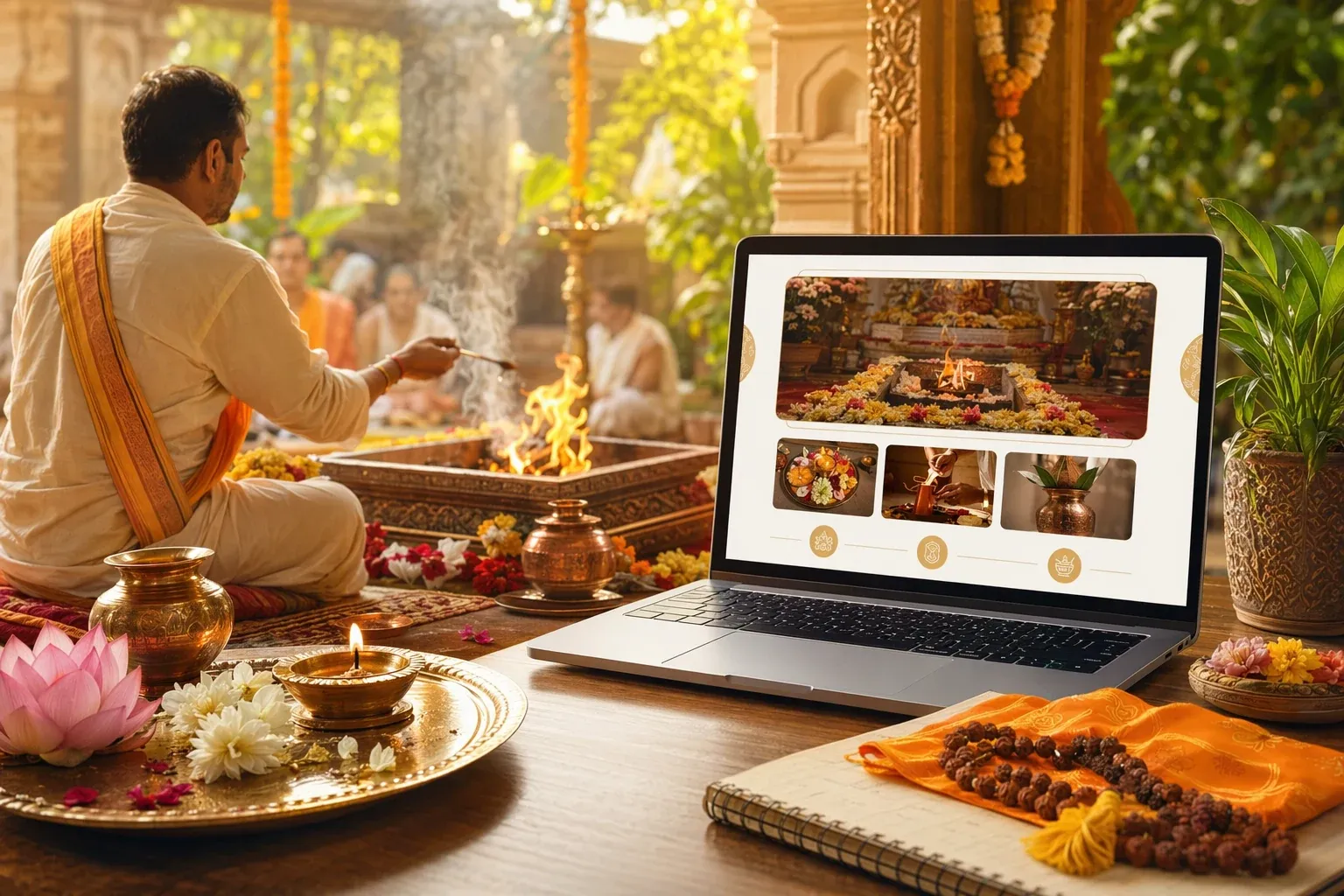
Yajnas are still performed today in many Hindu homes, temples, ashrams, and community spaces. They may be small family havans, larger temple ceremonies, festival rituals, griha pravesh rites, anniversary prayers, or community events guided by trained priests. The form changes by region and tradition, but the basic spirit remains offering, discipline, gratitude, and sacred intention.
Modern life has also changed how people arrange them. A family may speak to a local priest, ask a temple, join a community ceremony, or use an online platform to find a priest, materials, and even livestream options. That convenience can be helpful, but it also needs care. A yajna is not just an online service slot; it is a sacred act that should be arranged with respect and clarity.
What still happens in a yajna today
In a typical fire-based yajna or havan, a priest or trained guide helps with sankalpa, mantra, offerings, and the sequence of worship. A fire altar is prepared safely, offerings are made into the sacred fire, and the participants pray with a particular intention. Some ceremonies are simple and short; others involve longer recitation, multiple priests, special materials, or temple-level arrangements.
Beginners should remember that words like yajna, yagna, havan, homam, and puja may overlap in everyday speech. Usage changes across Hindi, Sanskrit, Tamil, Telugu, Kannada, Marathi, Bengali, Gujarati, and other language communities. For the wider meaning, read our simple yajna meaning guide first, then treat priest-led ceremonies as one living expression of that larger idea.
When families usually call a priest
Families often call a priest when the rite has a formal procedure, important mantras, a fire element, or a major life occasion. Common examples include housewarming, Satyanarayan puja with havan in some families, birthday or anniversary prayers, Graha Shanti, temple sankalpa, festival rituals, or remembrance ceremonies according to family custom. In these situations, guidance helps people avoid guesswork.
A good priest does more than “perform steps”. They explain what is needed, keep the ritual safe, guide pronunciation where possible, and help the family participate with devotion. The best experience is not when the family becomes a passive audience, but when everyone understands the intention and joins respectfully.
Online booking and livestreams
Online booking can solve real problems: distance, busy schedules, lack of local contacts, or diaspora families trying to connect with tradition. A platform may help you find priests, choose a date, arrange samagri, and coordinate a livestream for relatives who cannot attend. Used carefully, this can make tradition more accessible.
But online convenience has limits. A livestream is not the same as being physically present, and a booking page cannot judge every family’s tradition. Ask whether the priest understands your language, sampradaya or regional custom, purpose of the ceremony, and practical setting. If you are arranging a home fire ritual, also review basic safety ideas from our home yajna safety guide.
What to check before booking
First, check the purpose clearly. Are you arranging a simple havan, a family puja with fire, a temple sankalpa, or a larger ceremony? Second, ask what is included: priest dakshina, travel, materials, platform fee, livestream setup, duration, and number of priests. Hidden costs create discomfort, especially when people are emotionally invested.
Third, ask about materials. Natural, clean, and appropriate samagri matters; avoid chemical-heavy shortcuts, plastic decoration near fire, or vague “complete kit” claims that do not list contents. Our yajna samagri guide explains common items and their meanings in beginner language.
Red flags to avoid
Be cautious of anyone promising guaranteed wealth, instant marriage, forced “dosha removal”, fear-based threats, or pressure to buy expensive add-ons immediately. Hindu ritual language includes faith, blessing, and prayer, but it should not become emotional exploitation. A sincere priest can explain the rite without frightening you.
Also avoid platforms that hide who the priest is, provide no basic contact or support, refuse to explain costs, or use dramatic claims instead of respectful guidance. If something feels like a sales funnel rather than sacred service, step back and ask a trusted family elder, temple, or community member.
Dakshina and respect
Dakshina should be handled with dignity. It is not merely a “fee”, but in modern settings it is still fair to discuss expected amounts, travel, time, and materials openly. Respect works both ways: the family should honour the priest’s labour and learning, while the priest or platform should be transparent and not manipulate devotion.
Questions to ask the priest or platform
Before confirming, ask which mantras and ritual sequence will be followed, what language the priest can explain in, whether the family should fast or prepare in any way, and how many people can safely sit near the fire. Ask for a simple list of items you must arrange yourself. If the ceremony is for a housewarming, child, elder, or health-sensitive family member, mention that clearly so the setup can be adjusted.
For online bookings, also ask what happens if the priest is delayed, whether the booking can be rescheduled, who provides support during the ceremony, and whether the livestream link will remain private. These are not disrespectful business questions; they protect the dignity of the ritual by preventing confusion on the day itself.
Home ceremony versus temple ceremony
A home ceremony feels personal because the family gathers in its own space, but it also places responsibility on the host. Ventilation, seating, fireproof surfaces, parking, water, and clean-up all matter. A temple ceremony may be easier for fire safety and priest availability, but it may follow the temple’s standard method rather than every family custom. Choose the setting that best matches your purpose, budget, health needs, and level of preparation.
If relatives are joining from different cities, a small home yajna with a private video call may feel intimate. If the sankalpa is for a larger community or a festival, temple participation may be more suitable. Neither option is automatically superior; the right choice is the one that keeps devotion sincere and practical.
What beginners should remember
Yes, yajnas are still performed today. Online booking and livestreams can help, but they should support tradition rather than replace understanding. Ask clear questions, check materials, avoid fear-based promises, and choose guidance that treats the ritual as sacred. A well-arranged yajna should leave the family feeling calmer, clearer, and more connected to dharma, not pressured or confused.