An eco-friendly yajna is not about making sacred practice fashionable. It is about remembering that devotion should not carelessly harm the surroundings, the people nearby, or the living world that dharma asks us to respect. A ritual can be traditional and still be thoughtful about materials, smoke, waste, and safety.
For beginners, the simplest principle is this: use clean, natural, appropriate materials in moderate quantity, keep the fire controlled, maintain ventilation, and dispose of leftovers respectfully. Avoid exaggerated claims that smoke “purifies everything” in a medical sense. Sacred meaning and practical health awareness can stand together.
Why eco-friendly choices matter
Yajna is connected with offering, gratitude, and responsibility. If the outer ritual creates unnecessary plastic waste, chemical fumes, or avoidable discomfort for children, elders, neighbours, pets, or people with breathing issues, the spirit of care is weakened. Dharma is not only about what happens at the altar; it includes how our actions affect the wider environment.
This is close to the deeper idea explained in our Pancha Maha Yajna guide: human life carries responsibilities toward family, society, ancestors, knowledge, and living beings. Eco-conscious ritual is one small way to keep that responsibility visible.
Materials to prefer
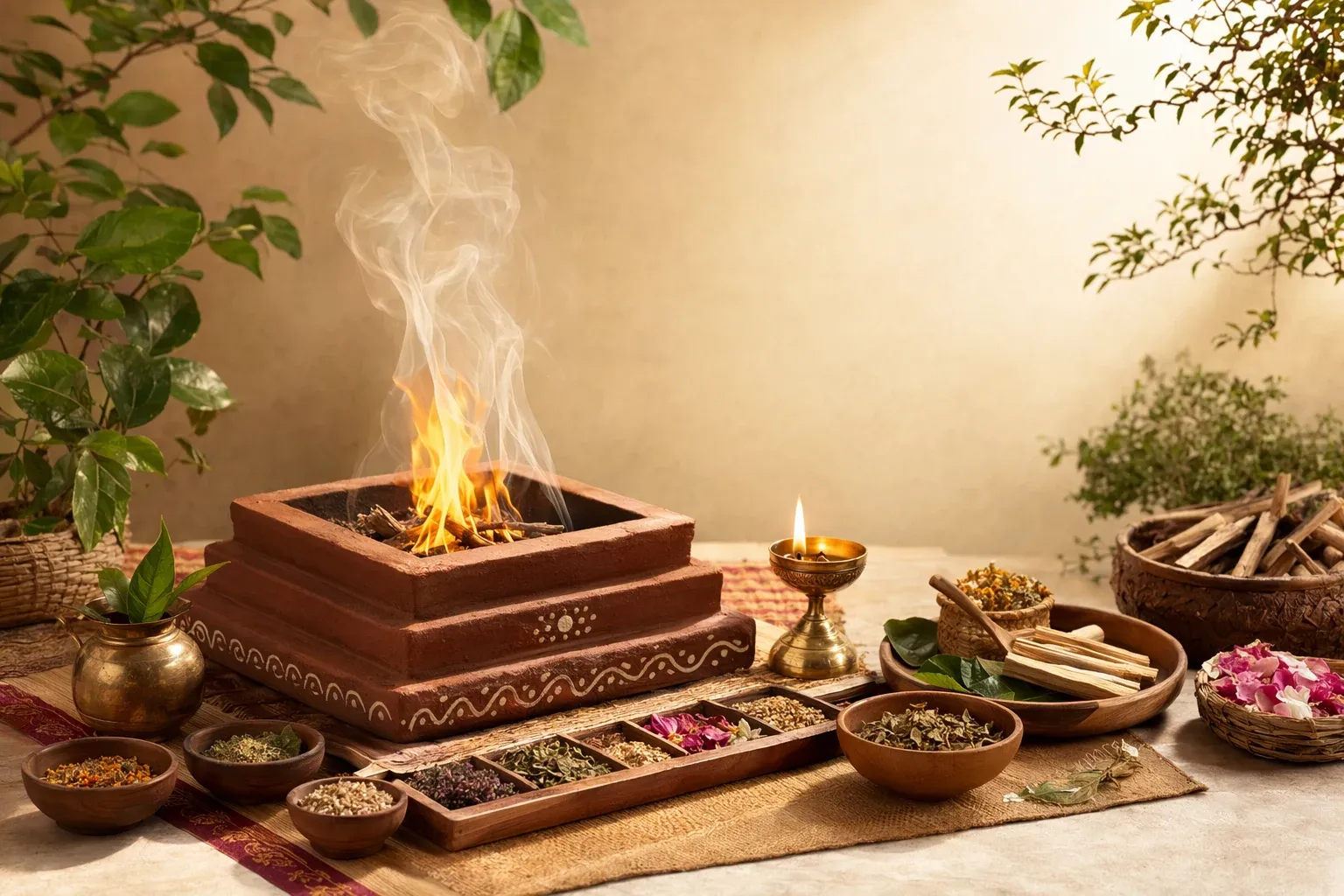
Prefer clean, dry, natural materials recommended by a trusted priest, family tradition, or temple guide. Common items may include small wooden sticks, ghee in controlled quantity, grains, herbs, havan samagri, flowers, and simple offerings. The exact list depends on the ritual, region, and sampradaya, so do not assume one internet kit fits every ceremony.
When buying a kit, read the contents. Choose suppliers who list ingredients clearly and avoid artificial fragrance, chemical powders, glitter, plastic packaging mixed into offerings, or unknown additives. If you are new to the objects, our yajna samagri explanation gives a beginner-friendly overview of common items and their symbolism.
Materials to avoid
Avoid burning plastic, synthetic cloth, glossy paper, laminated photos, chemical incense in excess, painted or varnished wood, and decorative material that produces toxic fumes. Also avoid turning the fire into a disposal method for random items. A sacred fire is not a dustbin. What is offered should be appropriate, clean, and guided by tradition.
Moderation matters. More smoke does not automatically mean more devotion. A smaller, well-guided ceremony done safely is better than a dramatic setup that makes people cough, alarms neighbours, or creates unnecessary risk.
Smoke and ventilation
Smoke should be treated honestly. Many families associate yajna smoke with sacred atmosphere, memory, and devotional feeling. At the same time, smoke is still smoke, and some people are sensitive to it. Keep windows open, use fans carefully so sparks do not spread, and avoid closed rooms with poor airflow. Children, elders, pregnant people, and anyone with asthma or respiratory conditions may need extra distance or a smaller setup.
For home practice, fire safety is not optional. Keep water or sand nearby, use a stable fire-safe surface, avoid loose synthetic clothing, keep curtains and paper away, and never leave the fire unattended. Our simple home yajna safety guide explains these boundaries in more detail.
Ash and leftover disposal
After the ceremony, wait until everything is fully cool. Ash should not be thrown casually while hot, and leftover materials should not be dumped in drains, roads, or public water bodies. Depending on local practice, cooled ash may be placed respectfully near plants in small quantity if suitable, or disposed of cleanly. Flowers and natural offerings can often be composted, but check what was mixed with them.
If a temple or priest gives specific instructions, follow those. The goal is respect, not superstition or carelessness. Clean-up is part of the ritual ethic: the space should feel cared for after the ceremony, not polluted.
Do not make exaggerated health claims
It is fine to say that yajna has sacred, cultural, and emotional meaning for devotees. It is not responsible to claim that any smoke automatically cures disease, removes all pollution, or replaces medical care. Bhaktilipi should keep devotion respectful without turning tradition into unsafe health advice.
How to plan a lower-smoke yajna
A lower-smoke yajna begins before the fire is lit. Use dry materials, small measured offerings, and a havan kund sized for the room or courtyard. Wet wood, excessive ghee, and large handfuls of mixed powder can create more smoke than needed. Ask the priest to guide the quantity so that the fire remains steady rather than dramatic.
Outdoor or semi-open spaces are usually easier for airflow, but they still need care: avoid windy corners where sparks can move, keep children away from the kund, and do not place the fire under low cloth decoration. Indoors, cross-ventilation matters. A calm, controlled flame is safer and more respectful than a smoky spectacle.
Respecting neighbours and shared spaces
Many families live in apartments, dense colonies, or shared buildings. In those settings, eco-friendly practice includes social responsibility. Inform neighbours if needed, keep the ceremony short and controlled, avoid corridors and staircases, and follow society rules. If open flame is not allowed, consider a temple ceremony or a symbolic puja guided by a priest rather than breaking safety rules.
This does not reduce devotion. It shows that spiritual practice and civic responsibility can live together. A ritual done with awareness of neighbours, animals, children, elders, and local rules reflects the same restraint that yajna is meant to cultivate.
What beginners should remember
Eco-friendly yajna means devotion with responsibility. Choose clean materials, avoid toxic burning, keep smoke moderate, ventilate the space, protect vulnerable people, and dispose of leftovers respectfully. The best ritual is not the biggest or smokiest one; it is the one performed with sincerity, safety, and care for the world around us.