
If you searched for 'ravana in ramayana', this beginner-friendly Bhaktilipi guide is for you.
Reader questions behind this guide: Who was Ravana in Ramayana?; Who are Kumbhakarna, Meghnad/Indrajit, and Mandodari?; What lesson does Ravana’s story teach?.
We will keep the explanation simple, respectful, and useful, while clearly separating tradition, interpretation, and modern historical discussion where needed.
Quick answer
Ravana is the king of Lanka in the Ramayana. He is powerful, learned, and described in many traditions as a devotee of Shiva, but he commits adharma by abducting Sita.
His story teaches a sharp lesson: talent, power, knowledge, and devotion cannot protect a person who refuses humility and right conduct.
Ravana’s identity and Lanka
Ravana rules Lanka, a wealthy and powerful kingdom. He is connected with the Rakshasa lineage and appears as a mighty ruler with great confidence.
The Ramayana does not make him weak. In fact, his strength makes his fall more meaningful. The epic asks: what happens when greatness is not guided by dharma?
His strengths and knowledge
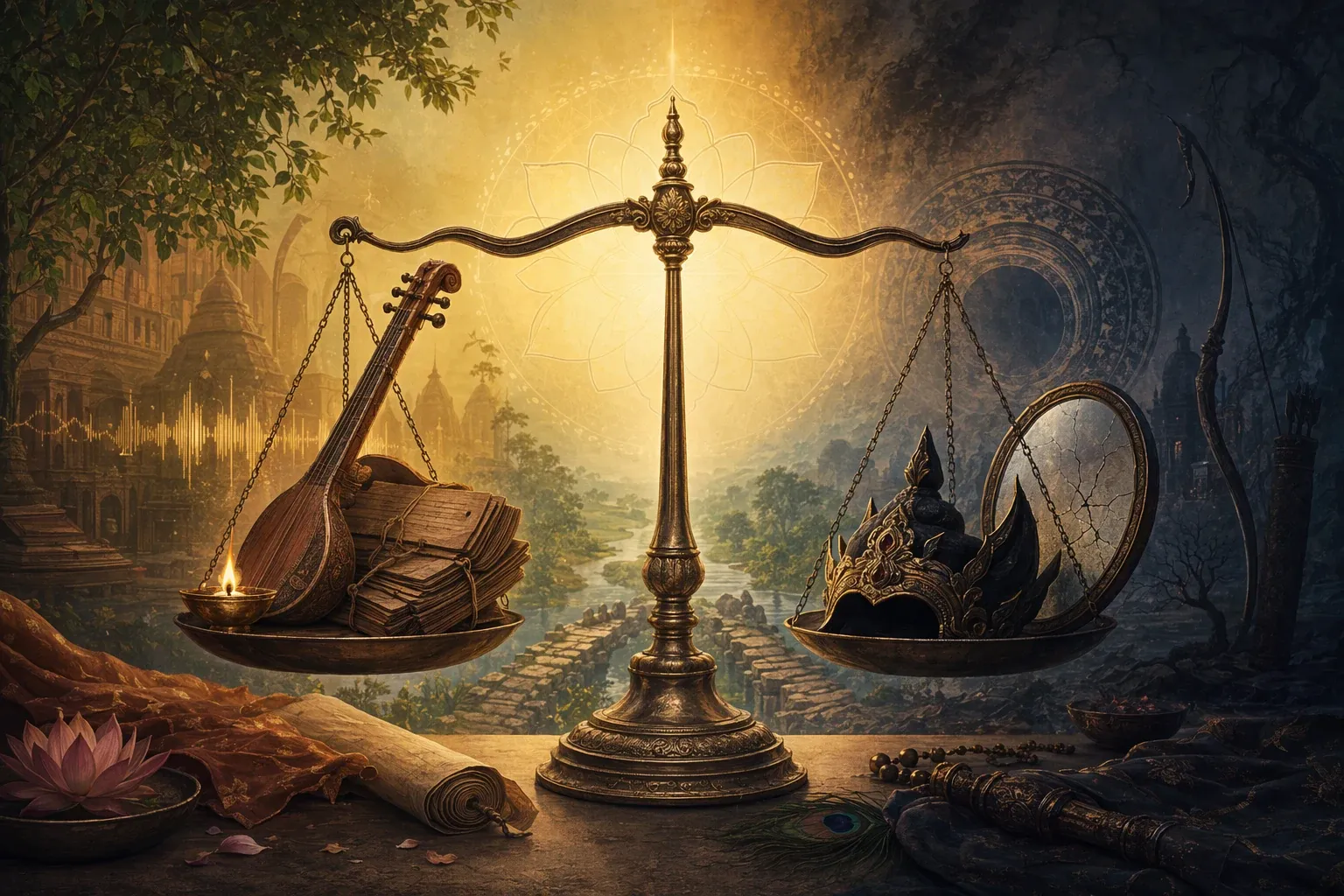
Ravana is often remembered as learned, skilled, and devoted to Shiva. Some later traditions speak of his music, scholarship, austerity, and power.
This nuance matters. The Ramayana’s lesson is not “knowledge is bad.” The lesson is that knowledge without humility can become dangerous.
The adharma of abducting Sita
Ravana’s central wrong action is the abduction of Sita. He uses deception and power against a woman who has not consented to him.
This is why the epic’s moral judgement is clear. Whatever his strengths, Ravana crosses a dharmic line and then refuses chances to correct himself.
Family and allies
Mandodari, Ravana’s queen, is often remembered as wise and dignified. Vibhishana, his brother, advises him to return Sita and later joins Rama when Ravana rejects dharma.
Kumbhakarna and Indrajit or Meghnad are important figures in Lanka’s side of the war. Their presence makes the conflict larger than a simple duel.
Final lesson: talent without dharma can fall
Ravana’s downfall is not caused by lack of ability. It is caused by ego, desire, anger, and refusal to listen to wise counsel.
That is why he remains such a powerful character for young readers. The epic warns: becoming impressive is not enough; becoming righteous matters more.
How to read Ravana respectfully
Some regional and modern discussions explore Ravana in different ways. It is fine to study complexity, but complexity should not erase the wrongness of Sita’s abduction.
A balanced reading can recognise Ravana’s brilliance while still understanding why the Ramayana presents Rama’s victory as a victory of dharma over adharma.