The 16 samskaras are traditional Hindu rites of passage that mark important turning points in life, from prayers before birth to education, marriage, and final rites. The Sanskrit word samskara can mean refinement, preparation, or an impression that shapes a person. In this article, it mainly means a sacred life-cycle ceremony.
A helpful way to understand the sixteen samskaras is not as a checklist that every Hindu family performs in exactly the same way, but as a cultural map. The rites say that life is not random. Birth, naming, first food, study, marriage, and death can all be met with prayer, family responsibility, and a sense of dharma.
For the base meaning of the word before this life-rite list, see our guide to What Is Samskara? Meaning in Hinduism, Yoga, and Daily Life.
What does samskara mean in this context?
In Hindu usage, samskara has more than one meaning. It can describe an outer rite, such as a naming ceremony, and it can also describe an inner impression formed by repeated thought or action. The life-rite meaning focuses on ceremonies that prepare a person for the next stage of life. The inner meaning focuses on character and habit.
Both meanings are connected by the idea of shaping. A rite shapes a moment by giving it sacred attention. A habit shapes the mind by repetition. That is why families may speak of good samskaras in everyday behaviour, while books on Hindu ritual may speak of the shodasha samskaras, or sixteen sacraments.
The 16 samskaras at a glance
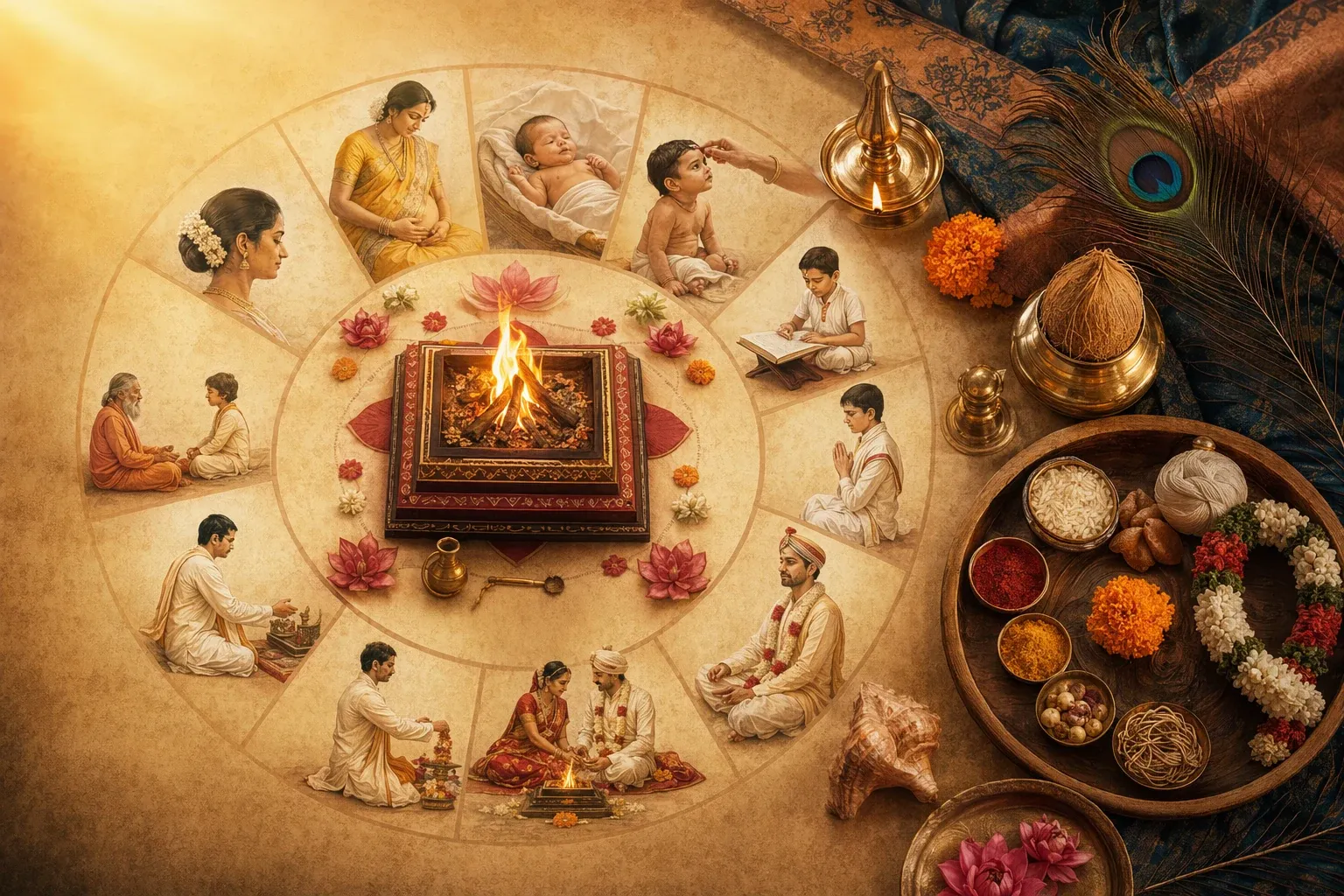
Lists differ across regions, texts, and communities, but a common beginner list runs like this: Garbhadhana, intention around conception; Pumsavana, prayers during pregnancy; Simantonnayana, care and blessing for the expectant mother; Jatakarma, birth rites; Namakarana, naming; Nishkramana, the first outing; Annaprashana, first solid food; Chudakarana or Mundan, first hair-cutting; Karnavedha, ear-piercing; Vidyarambha, beginning education; Upanayana, initiation into disciplined study; Vedarambha, beginning Vedic learning; Keshanta, first shaving or a coming-of-age marker; Samavartana, completion of student life; Vivaha, marriage; and Antyeshti, final rites.
This list is useful because it follows a human life in order. It begins before birth, moves through childhood and learning, enters adult household life, and ends with the community’s care for the dead. Some traditions count or name a few rites differently, so the spirit of the sequence matters more than forcing one universal version.
Before birth: intention, protection, and care
The first three samskaras are connected with conception and pregnancy. Garbhadhana is traditionally associated with a married couple’s intention to welcome a child with responsibility and sacred awareness. Pumsavana is linked with prayers for the child’s growth in the womb. Simantonnayana is often described as a rite for the mother’s well-being, reassurance, and mental peace during pregnancy.
Modern readers should approach these rites with cultural sensitivity. Older sources sometimes use language that reflects the social assumptions of their time. A thoughtful reading today can focus on the larger values: parenthood should be intentional, pregnancy deserves care, and the emotional world around the mother matters.
Birth and early childhood rites
Jatakarma welcomes the newborn. Namakarana gives the child a name and a place in family life. Nishkramana marks the child’s first formal outing, often explained as an introduction to the wider world. Annaprashana celebrates the first feeding of solid food. Chudakarana, known in many families as mundan, marks the first haircut. Karnavedha marks ear-piercing in communities that observe it.
These rites make ordinary milestones feel meaningful. A baby’s first food is not only nutrition; it becomes a family blessing. A name is not only a label; it becomes identity, memory, and belonging. Even when families simplify the ritual, they often preserve the emotional centre: elders gather, blessings are given, and the child is welcomed into a chain of relationship.
Education and growing up
Vidyarambha marks the beginning of education, often through writing first letters or invoking Saraswati and Ganesha. Upanayana is the better-known initiation associated with disciplined study and, in many traditions, the sacred thread. Vedarambha refers to the beginning of Vedic study. Keshanta and Samavartana belong to later student life, marking maturity and the completion of education.
Historically, these rites were closely tied to ideas of student discipline, guru, memory, and sacred learning. Practices also varied by caste, gender, region, and period, so a careful article should not pretend that every Hindu child experienced them in the same way. Today, families may reinterpret the educational samskaras as a prayer that learning should build humility, concentration, and responsibility.
Marriage and final rites
Vivaha, the marriage samskara, is one of the most widely practised Hindu rites today. It joins two people, two families, and a set of shared duties. The details vary widely: mantras, fire ritual, regional customs, vows, clothing, music, and food may all differ. Still, the central idea is that household life is a sacred responsibility, not only a private arrangement.
Antyeshti, the final rite, closes the life-cycle sequence. It honours the person who has died and helps the family and community face loss through ritual order. The rite reminds beginners that samskaras are not only cheerful celebrations. They also give a language for grief, remembrance, and continuity after death.
Are all 16 samskaras still practised?
Some are widely visible, such as naming, first food, mundan, education prayers, marriage, and funeral rites. Others may be observed only in particular families, regions, priestly traditions, or reform movements. Urban life, interregional marriage, migration, personal belief, and access to ritual specialists all affect what people actually do.
This variation is not a failure of the tradition. Hindu practice has always had local texture. One family may perform an elaborate ceremony; another may keep a short home prayer; another may value the ethical meaning without doing the full ritual. The respectful question is not, “Who is doing it perfectly?” but, “What value is this rite trying to preserve?”
Why is the number sixteen important?
Sixteen gives the tradition a memorable structure. It gathers many life events into one complete sequence and teaches that dharma touches the whole of life. The number itself should not be treated as a magic formula. It is better understood as a way of saying that human life can be refined at every stage.
For a beginner, the main takeaway is simple: the sixteen samskaras are not random ceremonies. They are a way of sacralising transition. They teach gratitude at birth, care in childhood, discipline in learning, responsibility in marriage, and dignity in death.
FAQs
What are 16 samskaras?
The 16 samskaras are traditional Hindu life-cycle rites. They mark major transitions such as conception, birth, naming, first food, education, marriage, and final rites.
What are the samskaras in life?
In this context, samskaras are rites that prepare and bless a person for a new life stage. The word can also mean inner impressions or habits, but the sixteen samskaras refer mainly to ceremonies.
Are the 16 sanskars still practised?
Yes, but unevenly. Naming, first food, mundan, marriage, and funeral rites are still common in many communities, while other samskaras are practised selectively or symbolically.