
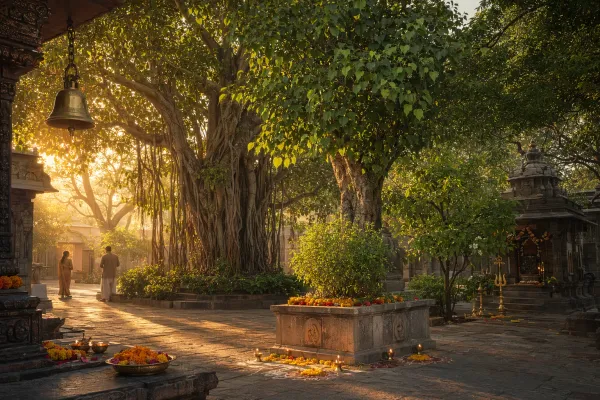
Seven Sacred Trees: What Does This List Mean?
Seven sacred trees is best treated as a learning list, not a fixed national rule. Here is a respectful India-focused explanation.
Seven sacred trees is best treated as a learning list, not a fixed national rule. Here is a respectful India-focused explanation.
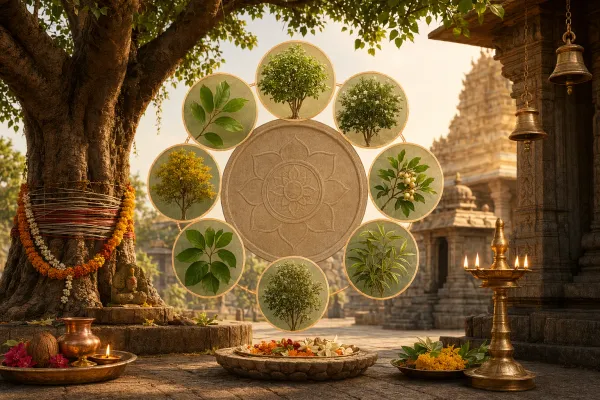
Nine sacred trees usually means Navagraha-linked sacred plants. The exact list varies, so here is a careful cultural explanation.
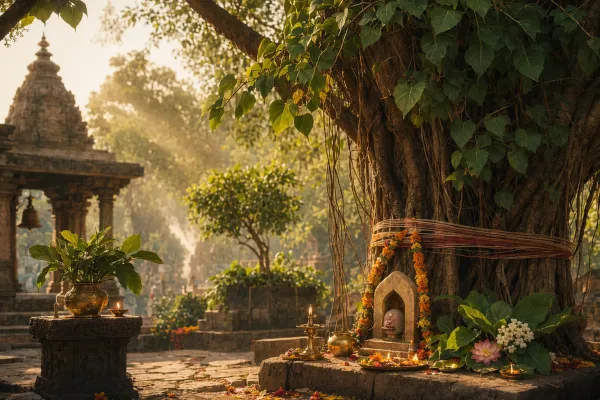
India has many sacred-tree lists. Here is a careful beginner answer to the popular five holy trees question, without forcing one rigid canon.
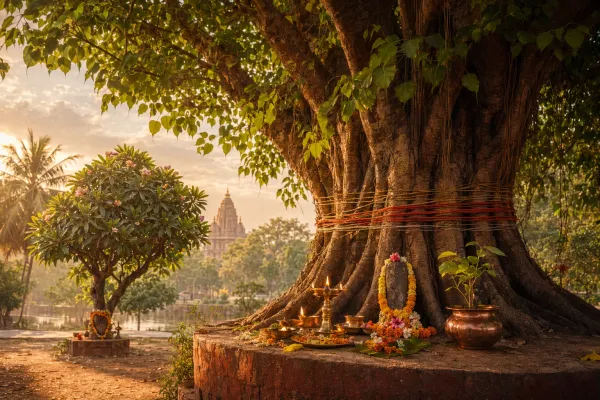
Sacred trees in India are not one fixed list. They vary by region, temple custom and community memory. Here are the most familiar examples and what they mean.
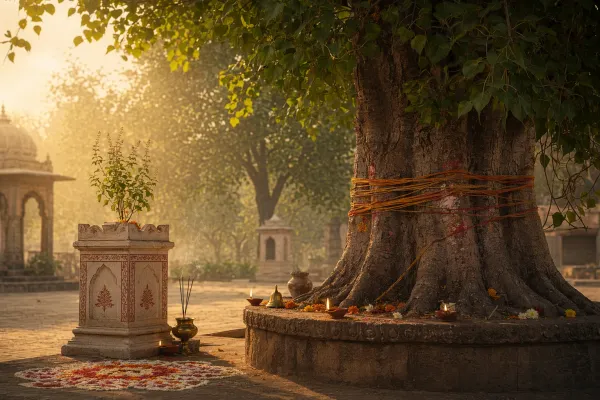
Sacred trees are still visible in India today through tulsi courtyards, peepal platforms, temple trees, village groves and conservation memory.
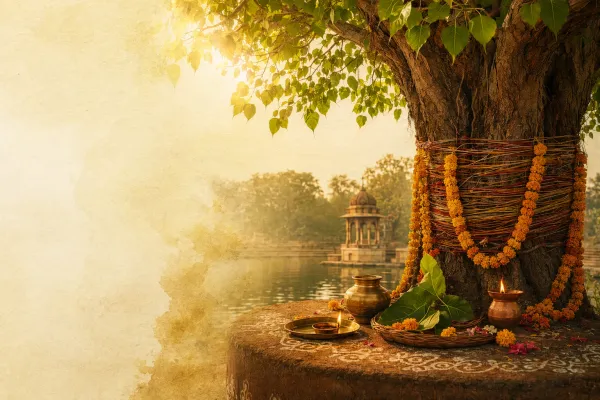
Trees became sacred in Indian culture because they protected life, carried stories, supported worship, and taught gratitude toward nature.
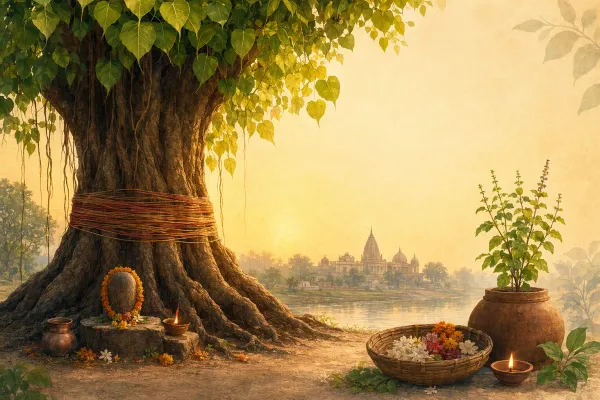
Sacred trees in India are living symbols of shade, care, memory, worship, ecology and community life, not plant-magic or blind superstition.
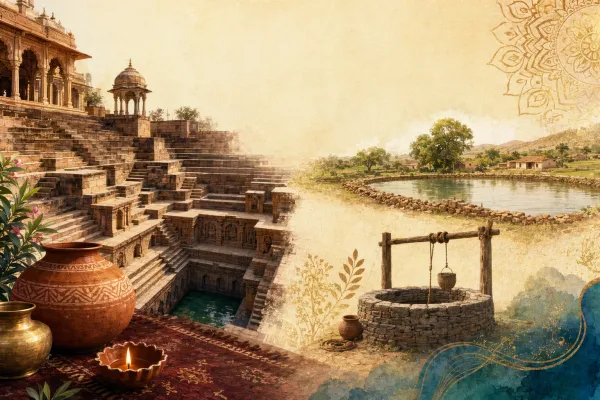
Stepwells, wells, and johads all belong to India’s water heritage, but each solved a different problem of access, storage, or recharge.

Indian board games are not only for children. They can train focus, patience, probability, memory, ethics, and meaningful social connection.