
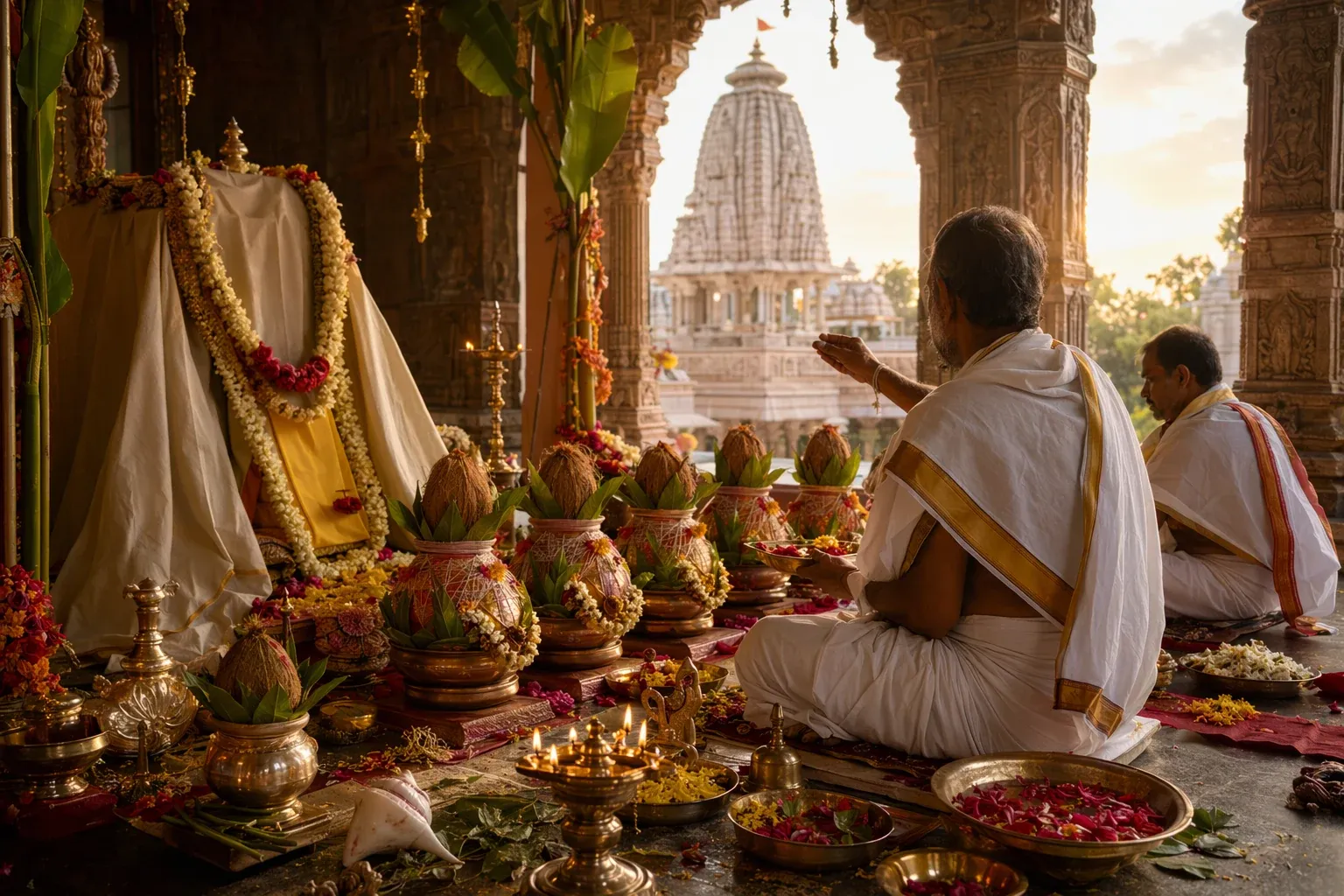
Why there are different kinds of Pratishtha
Pratishtha is a broad word connected with establishing or installing a sacred form. Because Hindu worship includes temples, homes, temporary festival images, yantras, shivlings, village shrines, and large pilgrimage centers, the word can appear in different contexts. Not every use has the same scale or responsibility.
Prana Pratishtha is the best-known term, but beginners may also hear about sthapana, punah pratishtha, jeernoddhara, kumbhabhishekam, kalasha rites, or festival installation. The exact vocabulary differs by region and tradition. The key is to ask what is being established, for how long, and with what ongoing care.
Formal Prana Pratishtha
Formal Prana Pratishtha ritually invites and honors divine presence in a murti, shivling, yantra, or sacred form. It is especially important in temples where regular public worship will continue. The rite is usually performed by trained priests or acharyas and may include purification, sankalpa, mantras, fire offerings, consecrated water, nyasa, and first darshan.
After this, the deity is treated as a living center of worship. Daily care becomes part of the commitment. This is explained further in what happens after Prana Pratishtha.
Sthapana or installation
Sthapana generally means placing or establishing. It may refer to installing a deity image on a home altar, setting up a kalasha, or placing a temporary festival murti. It can be sacred and meaningful, but it does not always mean full Prana Pratishtha.
For example, Ganapati sthapana during a festival can be deeply devotional and time-bound. A permanent temple consecration is different because it establishes ongoing worship for years or generations. For a clearer comparison, see Prana Pratishtha vs Sthapana.
Punah Pratishtha: second consecration or re-consecration
People sometimes ask whether a second Prana Pratishtha can be done. Traditions may speak of punah pratishtha, meaning re-establishment or re-consecration, in certain situations. This may be considered if a murti is damaged, a temple is renovated, worship has been interrupted for a significant period, or a deity is moved according to proper guidance.
The answer is not casual. A small scratch, temporary closure, or short travel situation may not require the same response as major damage or temple reconstruction. The decision belongs to qualified priests, acharyas, or temple authorities familiar with the tradition.
Jeernoddhara and renewal
In South Indian temple contexts, one may hear about renovation and reconsecration associated with kumbhabhishekam. A temple may undergo repairs, repainting, structural renewal, or restoration of the sanctum. After such work, ritual renewal may be performed to reaffirm the sacred presence and resume worship properly.
This shows that Hindu temple life has ways to care for sacred spaces over time. Temples are not frozen objects. They require maintenance, repair, and renewed devotion, all handled with respect.
Temporary festival installation
Some forms of worship are intentionally temporary. During festivals, a murti may be installed for a set number of days, worshipped with devotion, and then respectfully immersed or concluded. This does not make the worship less sincere. It reflects a different ritual purpose.
The temporary nature is built into the practice. The community knows from the beginning that the form will be worshipped for a period and then given farewell. Permanent Prana Pratishtha, by contrast, usually begins continuing daily worship.
How long does a Prana Pratishtha ceremony take?
The duration varies widely. A small household-related installation may take a few hours. A temple ceremony may continue for one day, three days, five days, or longer. Large temple consecrations may include preliminary rites, homas, kalasha worship, recitations, processions, and concluding ceremonies.
Duration depends on the deity, temple size, tradition, priestly guidance, resources, calendar, and whether construction or renovation is involved. Longer does not automatically mean more sincere, and shorter does not automatically mean careless. The important question is whether the rite is appropriate to its tradition and purpose.
In some communities, extra time is also given for devotees to participate through service, listening, offering flowers, or receiving prasada. This public participation can make the consecration feel like a shared vow rather than a private ritual act.
Who decides what is needed?
Priests, acharyas, temple trustees, hereditary caretakers, and knowledgeable elders may all be involved, depending on the setting. In a family home, the decision may rest with the family priest or guru. In a public temple, decisions may involve a larger religious and administrative group.
Beginners should be cautious about making decisions from online fragments. Sacred installation is specific. A shivling, Ganesha murti, Devi image, Vishnu murti, and yantra may have different expectations. See Shivling, Ganesh, and Murti Prana Pratishtha for examples.
Frequently asked questions
Can Prana Pratishtha be repeated?
In some situations, re-consecration may be advised, especially after major damage, relocation, renovation, or long interruption. A qualified tradition bearer should decide.
Is every festival installation Prana Pratishtha?
Not necessarily. Festival sthapana can be sacred and devotional without being the same as permanent temple consecration.
Why do some ceremonies last several days?
Longer ceremonies may include preparatory rites, fire offerings, kalasha worship, recitations, processions, and community participation.
What if I am unsure what kind of installation happened?
Ask what rite was performed, who guided it, whether the deity is permanent or temporary, and what daily worship is expected. These answers usually clarify the type.