
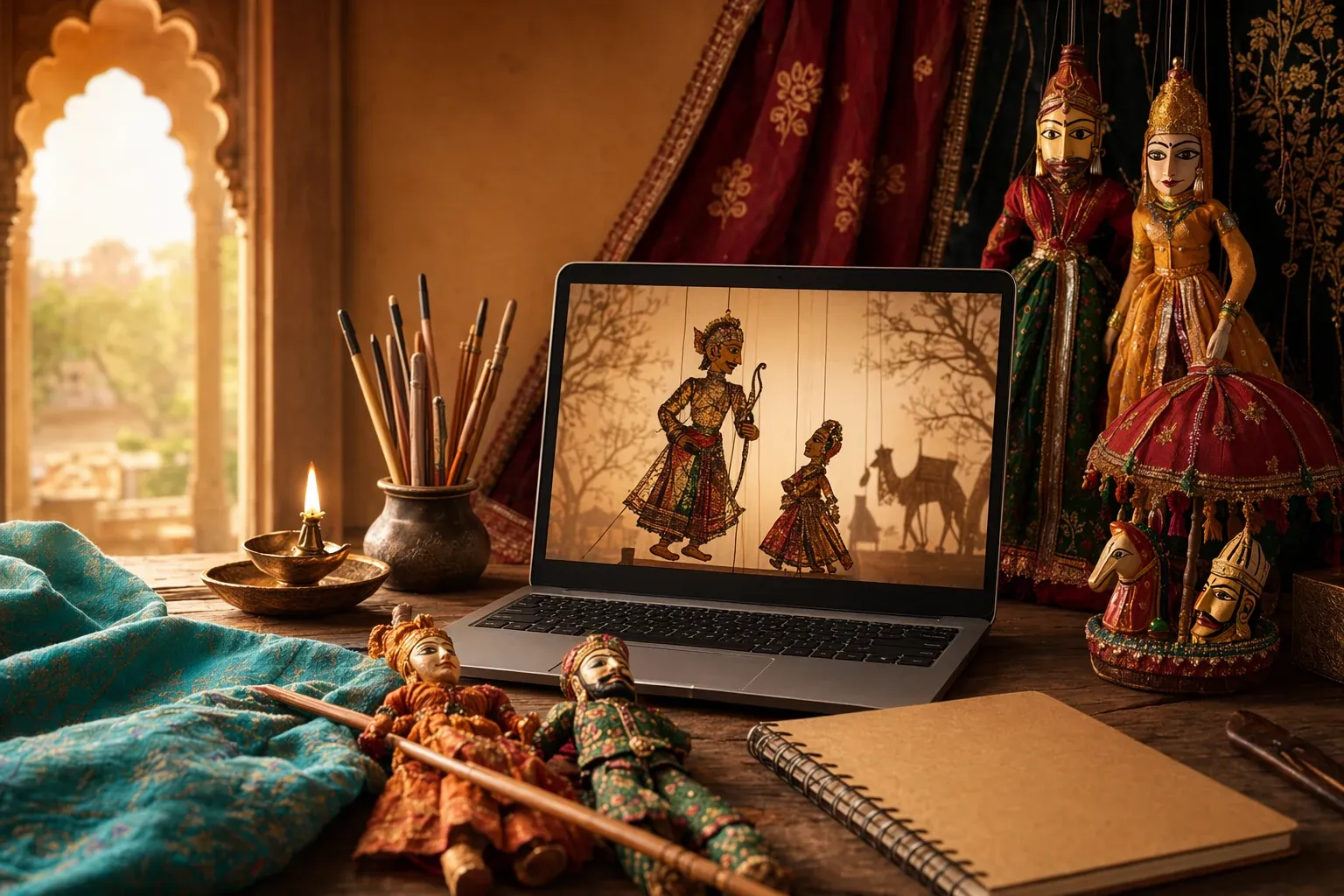
Watching Indian puppetry online can be a wonderful first step into a living art form, but the way we watch matters. Puppetry is not anonymous “folk content” floating on the internet. Behind each performance are artists, families, regional languages, craft skills, rehearsal time, music, stories, and often generations of inherited knowledge. A respectful viewer looks for context, credits the artist, avoids pirated uploads, and treats online watching as an invitation to learn more rather than a replacement for live performance.
If you are a student, teacher, parent, or beginner, the best online resources are not necessarily the longest videos or the flashiest thumbnails. The most useful resources tell you who is performing, which tradition is being shown, where it comes from, what story is being told, and whether the upload comes from an artist, museum, cultural institution, festival, school, or archive. A short properly credited clip can teach more than a long uncredited repost.
What to look for in an online puppetry performance
Start with the basic identity of the performance. Does the page mention the name of the puppet tradition, such as Kathputli, Tholu Bommalata, Tholpavakoothu, Ravanachhaya, Putul Nach, or Pavakathakali? Does it name the artist, troupe, village, state, language, or institution? Does it describe whether the performance uses strings, rods, glove technique, or shadow puppets? These details help you understand the art rather than simply consume the video.
Next, notice the setting. A museum video may focus on objects, making, and documentation. A festival recording may show a stage presentation and audience response. An artist’s own channel may include rehearsals, workshops, puppet-making clips, interviews, and tour information. A school workshop may explain materials and beginner exercises. Each type has value, but they teach different things.
Also check whether the video gives cultural context. Indian puppetry often draws from the Ramayana, Mahabharata, Puranas, local legends, folktales, social messages, and children’s stories. A respectful resource does not present these as random exotic visuals. It helps the viewer understand the narrative world, music, character types, and performance style.
Reliable places to begin
For broad orientation, begin with cultural institutions and documentation projects. Sahapedia’s introduction to Indian puppetry is useful for understanding the background of the art, its broad categories, and its regional variety. The World Encyclopedia of Puppetry Arts page on India gives a wider international reference point and explains how Indian puppetry connects with theatre, ritual, music, literature, and visual design.
The Indira Gandhi National Centre for the Arts has a page on its puppets slide collection. It is especially useful if you want to see puppetry as a documented visual tradition, not only as a performance clip. It notes the importance of costume, face make-up, technical details, and comparative study across regions. For students who need to make a presentation, such institutional pages help avoid vague statements.
The Center for Puppetry Arts has a catalogue page for its 1986 exhibit, Puppetry of India. Even though it is an exhibition resource rather than a streaming channel, it is helpful because it frames Indian puppetry in relation to hand, string, and shadow puppets, epic themes, and decorated folk-theatre traditions. Museum resources are especially good for visual literacy: they train you to ask what materials, colours, proportions, and characters are being used.
Artist, trust, and festival channels
For current activity, look for artist groups, puppet trusts, and festival organisers. UNIMA Puppeteers Trust India is a useful doorway because it connects Indian puppetry with a wider puppetry network. Its centre page lists contact points, social channels, a YouTube presence, and projects such as documentation, directories, festivals, scholarships, and awareness work. It also links to Sutradhar, an e-magazine circulated online in English within the puppetry community and beyond. This is the kind of source that can help beginners discover names, events, and conversations around the field.
Katkatha Puppet Arts Trust, represented on Google Arts & Culture, is another strong example of contemporary Indian puppet theatre. The page describes Katkatha as a Delhi-based puppet theatre company founded in 1998, with work across festivals, collaborations, training, short courses, workshops, internships, and professional puppeteer development. This is useful because it shows that puppetry is not only an inherited rural form; it also has urban, experimental, and professional theatre spaces.
Platforms such as Puppetry.in can be used as discovery points, especially for events, online shows, and classes. Treat such pages as starting points rather than final authority. If a listing mentions an artist or event, try to verify it through the artist’s own page, the organiser’s social media, or a named cultural venue. This habit protects both viewers and artists from misinformation.
How workshops differ from passive watching
A performance video teaches you how a finished piece looks and sounds. A workshop teaches you how the art is built. In a workshop, you may learn how a puppet’s joints work, why a shadow puppet needs a particular kind of cut-out, how voice and rhythm guide movement, or why a character’s headgear and costume matter. For beginners, workshops are also a chance to learn etiquette: how to handle materials, ask questions, credit teachers, and avoid copying sacred or community-specific designs without understanding them.
Online workshops can be useful for teachers and parents, but it is better to choose sessions conducted by identifiable artists, cultural educators, museums, schools, or recognised theatre groups. Be careful with generic craft videos that label every paper doll as “Indian puppetry” without naming a tradition. Simple classroom puppets are fine, but they should not be confused with inherited forms such as Tholu Bommalata or Pavakathakali.
Finding local shows after online learning
Online watching is often the first step; live performance is where puppetry feels most alive. To find shows near you, check the event pages of museums, cultural centres, children’s theatres, state cultural departments, school festivals, literature festivals, craft fairs, and performing arts venues. Search with both the general term “puppetry” and specific tradition names. If you know the name of an artist or troupe, follow their official page for tour announcements.
Avoid assuming that every city has a regular listing for every style. Many puppet artists travel, perform by invitation, or announce events through social media rather than ticketing platforms. If you contact an artist or organiser, be polite, concise, and specific. Ask about public shows, workshops, school sessions, or paid demonstrations. Do not ask for free private performances unless the artist has clearly offered them.
Respectful watching and sharing
Respectful sharing is simple: name the artist or group, name the tradition if known, link to the original page, and do not crop out credits. Do not re-upload full performances without permission. Do not rely on unofficial reposts, link farms, or “rare performance” copies that may violate artist rights. If you use a screenshot in a school presentation, cite the source and keep it educational, limited, and clearly credited.
If an artist offers tickets, donations, workshops, books, magazines, or merchandise, consider supporting them directly. If you are a teacher, pay for a workshop when possible rather than relying only on free clips. If you are a student, even a careful caption and original link help. Folk and traditional arts survive when audiences recognise labour, not just when they admire the final performance.
Beginner search phrases that work
- “UNIMA Puppeteers Trust India puppetry”
- “Katkatha Puppet Arts Trust workshop”
- “IGNCA puppets slide collection”
- “Tholu Bommalata performance official”
- “Tholpavakoothu artist workshop”
- “Kathputli artist performance Rajasthan”
- “Indian puppetry museum exhibit”
Add words such as “official,” “artist,” “museum,” “festival,” “workshop,” or “trust” to improve your results. If a page has no names, no credits, no source, and no context, treat it cautiously.
FAQs
What is the best platform to watch Indian puppetry online?
There is no single best platform. Start with artist channels, museum pages, cultural institutions, UNIMA-related links, festival pages, and recognised puppet theatre groups. Choose sources that name artists and traditions.
Can I learn Indian puppetry through YouTube?
Yes, but use YouTube carefully. Prefer official artist or institution channels, credited festival recordings, workshop clips from known teachers, and videos that explain the tradition rather than reposting without context.
Are online puppet-making workshops useful?
They can be very useful for beginners, especially when led by identifiable artists or educators. Workshops teach movement, material, voice, design, and etiquette in a way that passive watching cannot.
How can beginners support puppet artists?
Credit artists, share original links, attend paid shows, join workshops, buy tickets when available, invite artists through fair arrangements, and avoid pirated uploads or uncredited reposts.
How should I save resources for study?
Use legal viewing options and follow the platform’s terms. For study, save original links, artist names, institution names, and short notes so your references stay clear.