When people hear the word yoga today, they often think first of postures, mats, stretching, or fitness. Those can be part of modern yoga practice, but Hindu philosophy uses the word in a much wider sense. Yoga can mean a disciplined path that joins the mind, body, action, devotion, knowledge, and inner awareness toward a deeper goal. One of those goals is moksha, liberation from ignorance and bondage.
Different Hindu texts and traditions describe different yoga paths. The most familiar are karma yoga, bhakti yoga, jnana yoga, raja yoga, and hatha yoga. They are not always separate boxes. Many people combine action, devotion, study, meditation, and bodily discipline in daily life.
Moksha in simple language
Moksha is often explained as liberation. In Hindu thought, it points to freedom from ignorance, ego-bound confusion, and the cycle of suffering tied to attachment. Different schools explain it differently, but the broad idea is spiritual freedom: seeing reality more clearly and no longer being trapped by narrow self-centred identity.
Yoga paths are ways of preparing the person for that freedom. They train conduct, emotion, attention, understanding, and discipline. This is why yoga is connected with both daily life and spiritual practice.
Karma yoga: the path of action
Karma yoga teaches disciplined action without clinging to personal reward. It is strongly associated with the Bhagavad Gita, where action is not rejected but purified. The idea is not to become passive. It is to do one’s duty with sincerity, skill, and steadiness while loosening the ego’s grip on results.
For a student, karma yoga may mean studying honestly without making marks the entire identity. For a worker, it may mean doing the task well without turning every outcome into pride or despair. For a family member, it may mean serving with care rather than constant self-advertisement.
Bhakti yoga: the path of devotion
Bhakti yoga is the path of devotion, love, surrender, remembrance, and relationship with the divine. It may include prayer, kirtan, mantra, temple worship, personal devotion, or simply keeping the heart turned toward God in daily actions.
Bhakti is powerful because it transforms emotion. Love, longing, gratitude, grief, and hope can become spiritual energy. It also makes philosophy accessible. A person may not master complex arguments, but can still grow through sincere devotion and humility.
Jnana yoga: the path of knowledge
Jnana yoga is the path of knowledge and inquiry. It asks deep questions: Who am I? What is the self? What is permanent and what is changing? What is reality? In many traditions, jnana yoga involves study, reflection, discrimination, and meditation on truth.
This path is not just information gathering. Reading many books is not enough if the ego remains unchanged. Jnana yoga seeks insight that transforms identity. It asks the seeker to examine assumptions and recognise the difference between surface appearance and deeper reality. Bhaktilipi’s guide to maya in Hindu philosophy connects closely with this kind of inquiry.
Raja yoga: the path of meditation and mental discipline
Raja yoga is often connected with meditation, concentration, ethics, and control of the mind. The Yoga Sutras of Patanjali are especially important here. This path gives attention to yama, niyama, posture, breath, sense withdrawal, concentration, meditation, and absorption.
For beginners, the key idea is that the mind needs training. If attention is constantly scattered, deeper insight becomes difficult. Raja yoga offers a disciplined map for calming, focusing, and refining awareness.
Hatha yoga: body, breath, and preparation
Hatha yoga is commonly associated with postures and breath practices. In traditional settings, it is more than exercise. It prepares the body and energy for steadier practice. Modern classes may focus mainly on health, flexibility, and stress relief, which can be valuable, but the older context connects bodily discipline with inner transformation.
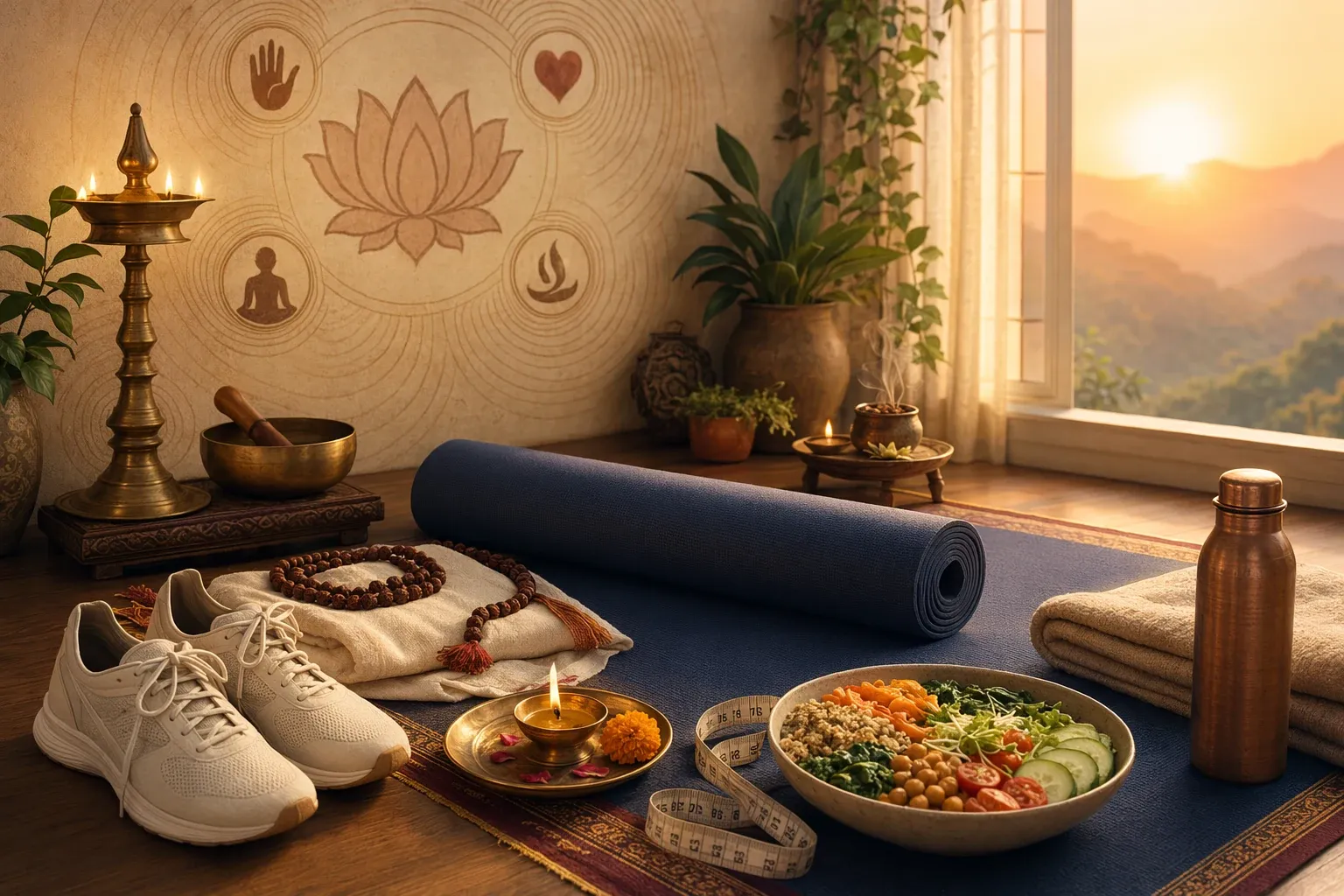
A respectful beginner approach is to remember both dimensions. Yoga can support physical well-being, but it also has philosophical and spiritual roots. Reducing it only to fitness misses much of its meaning.
Do you have to choose only one path?
Many Hindu teachers recognise that people have different temperaments. Some are naturally active, some devotional, some reflective, some meditative, some drawn to disciplined physical practice. The paths meet different needs, but they can also support each other.
A person may practice karma yoga through service, bhakti through prayer, jnana through study, raja through meditation, and hatha through posture and breath. The balance may change over a lifetime.
The main takeaway
Yoga paths to moksha are not a competition. They are ways of transforming human life. Karma yoga purifies action. Bhakti yoga opens the heart. Jnana yoga sharpens insight. Raja yoga steadies the mind. Hatha yoga disciplines body and breath.
Together, they show why yoga in Hindu philosophy is much larger than a set of exercises. It is a family of paths for living, seeing, loving, acting, and awakening with greater freedom.
A respectful modern approach
A modern beginner does not need to force all paths into one routine. Someone may begin with a few minutes of breath awareness, a simple prayer, a commitment to honest work, or regular study. The important point is sincerity and steadiness. Yoga becomes deeper when practice changes how we speak, choose, serve, rest, and react.
It is also wise to learn from trustworthy teachers and good translations. Hindu philosophy has many schools, so patient learning protects the richness of the tradition from being reduced to slogans or exercise trends.
The shared direction
Although the paths look different, they share a movement away from narrow ego and toward steadier awareness. Action becomes less selfish, devotion becomes more sincere, knowledge becomes more direct, meditation becomes calmer, and bodily discipline becomes more mindful. In that sense, the paths are different doors opening toward a life shaped by clarity, humility, and freedom.