
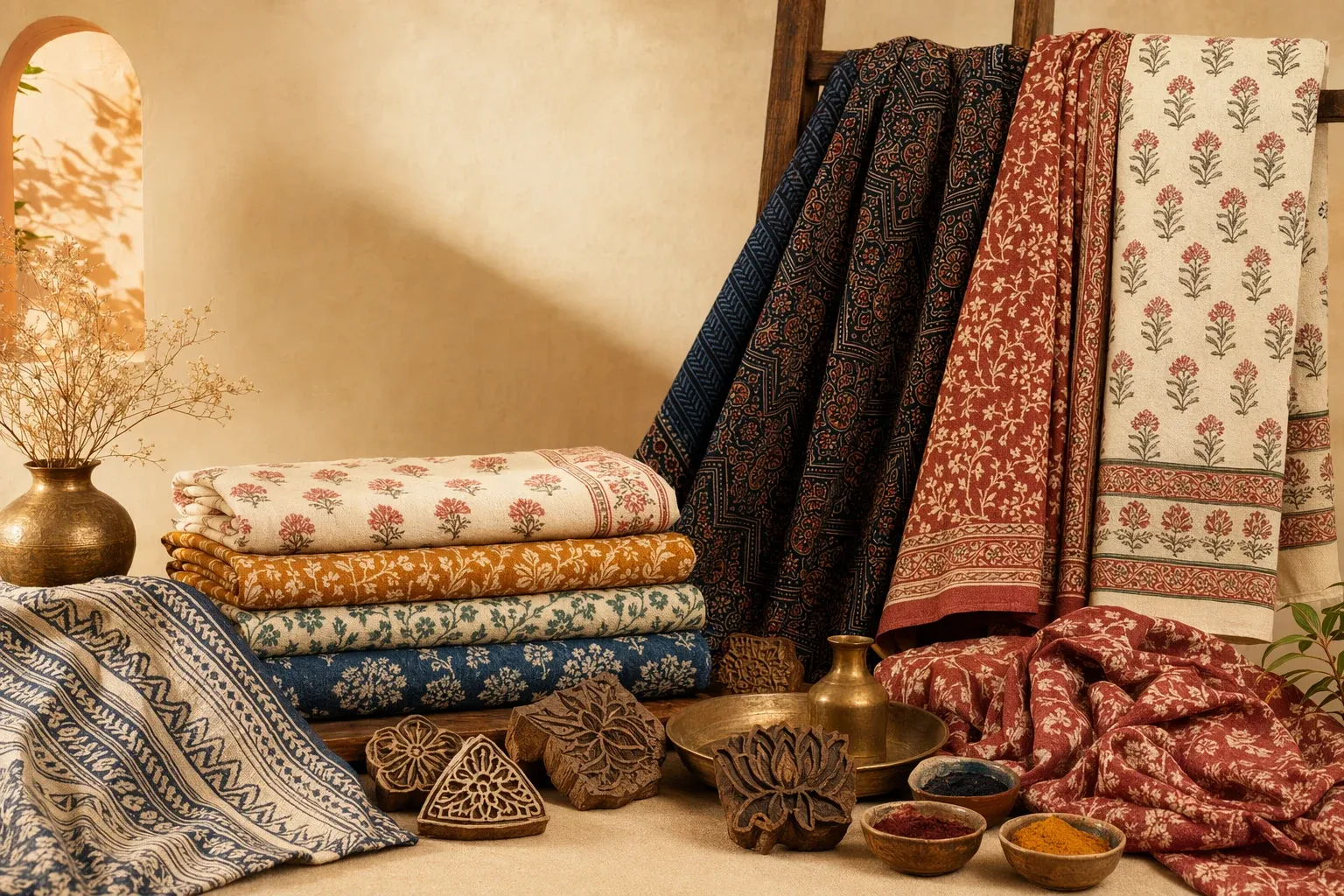
Indian block print textiles are fabrics decorated by stamping designs onto cloth with carved blocks. The idea sounds simple: dip a block, press it on fabric, repeat the pattern. In practice, good block printing needs careful design, steady hands, colour knowledge, fabric preparation, drying time, washing, and years of skill.
A block-printed textile may be a sari, dupatta, stole, kurta fabric, bedsheet, cushion cover, table cloth, or wall hanging. Some pieces are soft everyday cottons. Others are refined craft textiles with complex layers of colour and resist work. The handmade character is visible in tiny variations from one impression to the next.
How block printing works
The process usually begins with cloth preparation. Cotton may be washed, treated, or mordanted so colour can bind properly. Artisans prepare dyes or pigments, align the cloth on a printing table, and use carved wooden blocks to stamp the design. Each block carries one part of the pattern. A simple design may need one block. A more complex design may need separate blocks for outline, fill, and additional colours.
The printer must align each impression by eye and touch. Too much pressure can blur the design. Too little pressure can leave gaps. The rhythm matters: dip, place, press, lift, and repeat. This is why handmade repeats have life. They are regular enough to form pattern but human enough to avoid lifeless sameness.
Ajrakh printing
Ajrakh is one of the most respected block-printing traditions connected with Kutch, Sindh-linked cultural history, and artisan communities known for complex resist and mordant processes. Ajrakh designs often use geometry, stars, floral forms, and deep colours such as indigo, madder red, black, and white.
Ajrakh is not merely a “print style” in the casual sense. It involves multiple stages of washing, printing, resisting, dyeing, and drying. The result can feel architectural, balanced, and meditative. Beginners can recognise Ajrakh by its symmetry, deep palette, and layered patterning.
Bagru printing
Bagru printing, associated with Rajasthan, is known for earthy colours, natural dye traditions, and motifs that may include flowers, leaves, vines, and geometric forms. Dabu, a mud-resist technique, is also connected with this region. In Dabu work, a resist paste is applied before dyeing, so covered areas remain lighter when the cloth is dyed.
Bagru textiles often feel grounded and warm. They are widely used in clothing and home textiles. The charm lies in the balance between utility and craft depth.
Sanganeri printing
Sanganeri printing, also from Rajasthan, is often associated with finer floral patterns, delicate butis, and lighter backgrounds. Many Sanganeri prints feel airy and graceful, making them popular for summer clothing, bedsheets, and soft cotton garments.
A beginner can compare Bagru and Sanganeri by mood: Bagru often feels earthier and bolder, while Sanganeri often feels lighter and more floral. This is a broad learning shortcut, not an absolute rule.
Kalamkari and hand-drawn cloth
Kalamkari is not the same as block printing in every form, but it belongs nearby in a beginner’s map of Indian painted and printed textiles. Some Kalamkari traditions use hand drawing with a pen-like tool, while others include block-printed outlines and painted details. Mythological stories, trees, flowers, and narrative panels often appear in Kalamkari cloth.
This shows that Indian textile design is flexible. Printing, painting, dyeing, and storytelling can overlap.
Why handmade prints vary
If you look closely at a handmade block print, you may see slight shifts in alignment, changes in pressure, or tiny colour differences. These variations are part of the human process. They should not be confused with careless work. A skilled artisan keeps the pattern coherent while allowing small signs of the hand to remain.
Machine-printed cloth can imitate block-print motifs, but it often lacks the same touch. That does not make every machine print bad; it simply makes it different. If a seller claims something is hand-block-printed, the price and description should reflect that honestly.
Common motifs in block prints
Flowers, vines, paisleys, leaves, dots, rosettes, grids, elephants, birds, and geometric repeats are common. Some motifs are chosen for beauty, some for tradition, and some because they work well as repeat patterns. Borders may frame the cloth, while all-over designs fill the body.
Colour also shapes the identity of a print. Indigo and madder combinations feel different from soft pink florals, black-and-red Dabu patterns, or bright contemporary palettes.
How to buy and use block print textiles respectfully
A respectful buyer asks what technique was used, whether it is hand-block-printed, what fibre the cloth uses, and how to care for it. Natural dyes may need gentle washing. Some colours may bleed in the first wash. Strong detergents and harsh sun can damage certain textiles.
It is also wise to avoid treating every print as an anonymous ethnic pattern. Ajrakh, Bagru, Sanganeri, Dabu, and Kalamkari carry regional and community knowledge. Naming the tradition correctly helps honour the makers.
Block print in modern homes and clothing
Block prints work beautifully in contemporary life because they are both old and adaptable. A block-printed kurta can be everyday wear. A printed stole can add craft detail to simple clothing. Curtains, quilts, cushion covers, and table linens can bring handmade pattern into a home without turning culture into costume.
For a wider place-based map, read famous textile cities of India. For another Indian art tradition built from repeated forms and careful handwork, what is Kolam is a useful comparison.
The simple takeaway is that Indian block print textiles are made through patience, pressure, and pattern memory. The beauty is not only in the final design. It is in the repeated human action that places each mark on cloth.