
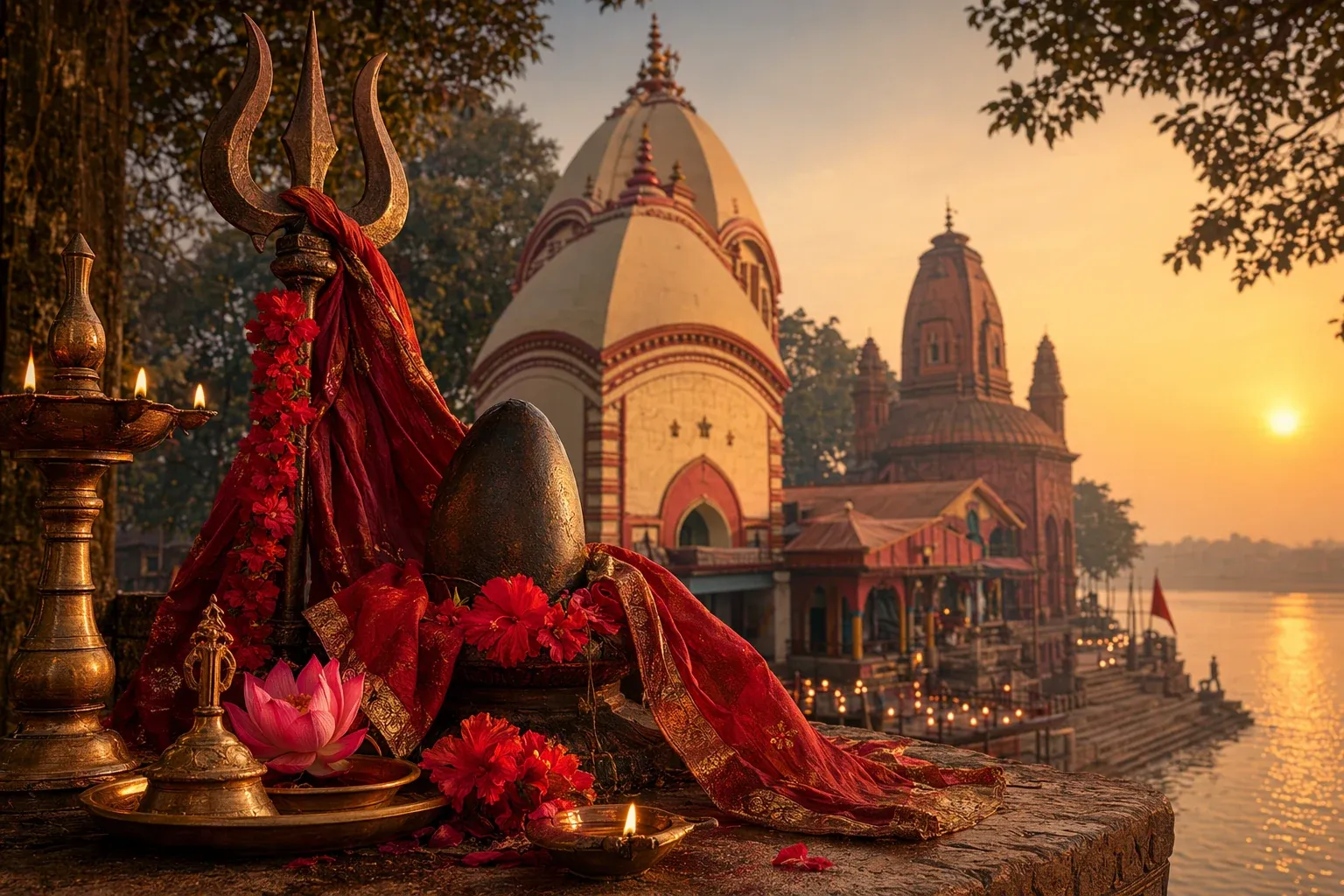
West Bengal has one of India’s most visible cultures of Devi worship. In Kolkata, Kalighat draws devotees to Kali as a living mother of the city. In Birbhum, Tarapith is remembered for Tara worship, tantric associations, cremation-ground symbolism, and the saint Bamakhepa. Together, these places help beginners see how a Shakti Peeth is more than a dot on a list. It is a meeting point of story, temple practice, local memory, song, festival, and personal devotion.
A Shakti Peeth is traditionally understood as a sacred seat of the Goddess. Many Hindu tellings connect these sacred places with the story of Sati, Shiva’s grief, Vishnu’s intervention, and the spread of Devi’s presence across the subcontinent. Different texts and regional lists do not always agree on every name, body-part association, or exact count. That is why a careful guide should explain both the widely accepted devotion and the local tradition without pretending every list is identical.
Why Bengal feels so strongly connected with Shakti
Bengal’s religious culture has long given a central place to the Goddess in forms such as Kali, Durga, Tara, Chandi, and Manasa. This is visible in household worship, public festivals, temple songs, village shrines, Shakta poetry, and the emotional language people use for Ma, the Mother. Durga Puja and Kali Puja are the most famous public expressions, but the feeling is not limited to festival days. In many families, the Goddess is both cosmic power and intimate protector.
This background matters because Shakti Peeth pilgrimage is not only about counting sites. A visitor to Bengal meets a culture where Devi bhakti is woven into art, music, food offerings, neighbourhood celebrations, and everyday speech. Kalighat and Tarapith make sense inside that wider world. One is an urban Kali temple at the heart of Kolkata’s devotional memory. The other is a smaller sacred town where Tara worship is linked with fierce compassion, spiritual discipline, and Bengal’s tantric heritage.
Kalighat: Kolkata’s famous Kali shrine
Kalighat Kali Temple is among the best-known sacred places in West Bengal. It is commonly included in Shakti Peeth traditions and is often associated with the toes or a part of Sati’s right foot in popular lists. The temple is dedicated to Kali, shown in Bengal’s powerful motherly form: dark, intense, protective, and beyond ordinary social polish. For many devotees, Kalighat is not simply an ancient site; it is Kolkata’s living sacred centre.
The temple’s setting also shaped the city’s identity. The name Kolkata is often popularly linked with Kalikata and Kali, though historians discuss the older place-names carefully. What is certain is that Kalighat became a major devotional landmark. Pilgrims come for darshan, offerings, vows, and gratitude. Local worship includes the rush of crowds, bells, flowers, red hibiscus, lamps, and the feeling that the Mother is close enough to be approached with ordinary human worries.
For a beginner, Kalighat teaches an important point about Shakti worship. Kali may look fierce in images, but the devotional relationship is often tender. Devotees approach her as Ma Kali, the mother who cuts through fear, ego, and helplessness. That emotional closeness is one reason Bengal’s Kali bhakti has influenced poetry, music, theatre, and modern religious imagination far beyond the temple itself.
Tarapith: Tara, cremation-ground symbolism, and Bamakhepa
Tarapith, in Birbhum district, is another deeply loved Shakta centre. It is dedicated to Tara, a form of the Goddess whose name suggests the one who carries devotees across difficulty. Tarapith is famous for its temple, its association with the cremation ground, and the memory of the saint Bamakhepa, whose intense devotion to Ma Tara remains central to local storytelling.
Whether Tarapith is counted in every standard Shakti Peeth list is a point where careful language helps. Many devotees treat it as a major Shakti sacred place, and it is often discussed alongside Bengal’s Peeth traditions. Some formal lists identify other Bengal sites more strictly. Instead of forcing one rigid answer, it is better to say that Tarapith is a major Shakta pilgrimage centre with strong Peeth-like sacred status in living devotion.
The cremation-ground association can sound frightening to a young reader, but its meaning is spiritual rather than sensational. In Shakta and tantric symbolism, the cremation ground reminds seekers that the body is temporary, ego is fragile, and the Mother’s compassion reaches even the places people usually fear. Tara is worshipped as a fierce but caring form of wisdom. The stories around Bamakhepa show a devotee who loved the Goddess with childlike intensity, outside ordinary ideas of respectability.
Are there other Shakti Peeths in West Bengal?
West Bengal is connected with several Shakti Peeth names in different traditions. Along with Kalighat, lists often mention sites such as Bakreshwar, Kankalitala, Nandikeshwari, Attahas, Nalhati, and Bahula, though details vary by source and region. Some lists place a site in present-day Bangladesh or nearby eastern India, which reminds us that sacred geography is older than modern state borders.
This variation is not a problem if we read it correctly. Hindu pilgrimage lists grew through Puranic storytelling, regional memory, temple tradition, and local devotion. A full Shakti Peeth list is useful for orientation, but it should not erase the richness of local worship. For Bengal, Kalighat and Tarapith remain the most familiar names for many beginners, while other temples open a wider map for serious pilgrims.
How Kalighat and Tarapith are different
Kalighat feels urban, crowded, and closely tied to Kolkata’s public identity. It is a temple where many visitors come during a city trip, during Kali Puja, or as part of family worship. Its language is strongly Kali-centred, with the Mother approached through direct darshan, offerings, and the emotional force of city devotion.
Tarapith feels more like a pilgrimage town. It invites slower attention to Tara, sadhana, saint stories, and the unsettling but meaningful symbolism of the cremation ground. A visitor may notice that the mood is less about a metropolitan landmark and more about an intense sacred landscape. Both places are Shakta, but their devotional textures are different.
This difference is helpful for young readers. It shows that Devi worship is not one single style. The same broad tradition can include public festival beauty, philosophical depth, village memory, household prayer, fierce imagery, motherly tenderness, and disciplined spiritual practice. Bengal holds many of these strands together.
Visiting with respect
If you plan to visit Kalighat or Tarapith, first remember that these are living temples, not museum exhibits. Dress modestly, follow queue rules, be patient with crowds, and avoid photographing restricted areas. If you are unsure about offerings, ask the temple office or a trusted local guide rather than following random pressure. During festival seasons, crowds can be heavy, so families with children or elderly pilgrims should plan timing carefully.
It is also wise to avoid treating Shakti Peeth travel as a checklist race. A beginner-friendly pilgrimage can include reading the story, learning the temple’s local name for the Goddess, noticing the Bhairav association if it is part of that tradition, and reflecting quietly after darshan. Our Shakti Peeth darshan planning guide explains this slower approach in more detail.
A simple way to remember the meaning
Kalighat shows Bengal’s Kali bhakti in the heart of a great city. Tarapith shows Tara devotion in a sacred landscape shaped by saint stories and tantric symbolism. Other Bengal sites add further layers to the Peeth map. Together, they teach that Shakti is worshipped not only as power in an abstract sense, but as Mother, place, memory, courage, compassion, and protection.
For a beginner, that is the most useful takeaway. West Bengal’s Shakti Peeth tradition is not only about asking which temple is official. It is about understanding how people experience the Goddess through sacred geography. Kalighat and Tarapith continue to matter because devotees still meet Ma there—with fear, hope, gratitude, questions, and love.