
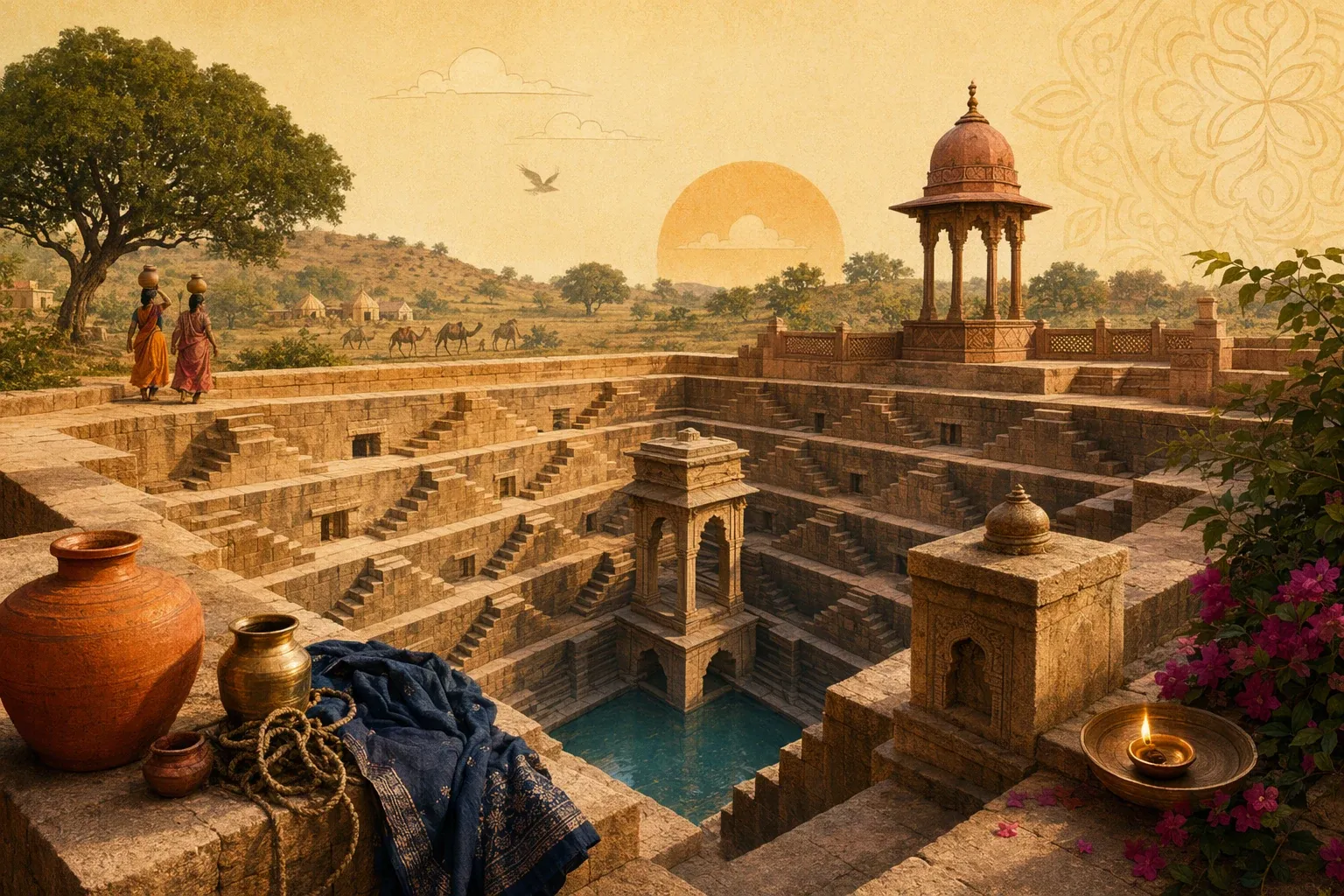
Stepwells were built in India for a practical reason first: people needed dependable access to water. In many regions, rain does not fall evenly through the year. Monsoon months may bring plenty, while summer can bring scarcity. A stepwell helped communities reach water even when the water level dropped. But that is only the first layer. Stepwells were also built for shade, rest, travel, community life, religious meaning, and public service.
If we reduce them to beautiful monuments, we miss their purpose. If we reduce them to engineering alone, we miss their human life. A stepwell stands at the meeting point of climate, design, generosity, and culture. That is why these structures appear in so many conversations about Indian heritage today.
Water access in a seasonal climate
The most important reason was water. Much of western and north-western India has to manage heat, long dry months, and uneven rainfall. A regular open pond can dry or become difficult to use. A simple well gives water from a vertical shaft, but access depends on ropes, buckets, and the well mouth. A stepwell adds a descending path, so people can walk down to the level where water is available.
This design is especially useful when the water level changes. During wetter months, the upper levels may be enough. During drier months, people can descend deeper. The structure therefore turns a changing natural condition into something communities can manage. It does not remove dependence on rain, but it creates resilience.
Storage, maintenance, and groundwater
Stepwells also helped with storage and access to groundwater. Builders dug into the earth, lined spaces with stone, and created steps, chambers, and shafts. These structures required planning, labour, and knowledge of soil, water level, stonework, and drainage. A badly built well could collapse or become unsafe. A well-designed stepwell could survive long enough to become part of a town’s memory.
The stepped design made maintenance easier. People could inspect walls, remove silt, repair masonry, and reach different levels more safely than in a narrow shaft. This is why a stepwell should be seen as civic infrastructure. It was a public system for water, not just a decorative pit.
Cool spaces in hot weather
Another reason was shade. As one descends into a stepwell, the air can feel cooler and quieter than the surface above. Stone, depth, and reduced direct sunlight create relief in hot seasons. This made stepwells useful as resting places, especially for travellers, workers, and local residents. A person collecting water might also spend a few moments in shade before returning to the heat.
This cooling effect explains why some stepwells developed galleries, pillared spaces, and platforms. These were not random decorations. They shaped how people moved, rested, and gathered. In a dry climate, comfort itself becomes part of design.
Community gathering and everyday life
Water structures often become social structures. People meet where water is drawn. A stepwell could bring together women collecting water, children learning local habits, elders resting, travellers asking directions, and workers taking a break. In some places, rituals, offerings, seasonal practices, or local stories became attached to the site.
This social use matters because public water is also about relationship. Who maintains the structure? Who gets access? Who shows respect? Who keeps it clean? A stepwell could teach a community that water is not private luxury alone. It is shared responsibility.
Public service, patronage, and memory
Many stepwells were built or supported by rulers, queens, merchants, wealthy families, guilds, or communities. Building a water structure could be an act of public welfare. It could also display status, devotion, or remembrance. Rani ki Vav at Patan is traditionally linked with Queen Udayamati and the memory of King Bhima I. Whether we speak through tradition or historical sources, the larger idea is clear: water-building was a respected form of giving.
In Indian ethical language, this connects with seva, dana, and dharma. A patron who creates water access serves living beings. The structure may carry the patron’s name, but its daily value belongs to the people who use it. That is a powerful form of memory: not only a statue, but a useful gift.
Sacred meaning and artistic expression
Water has sacred importance in Indian traditions. Rivers, tanks, wells, tirthas, temple ponds, and bathing places all carry layers of ritual and symbolic meaning. Some stepwells were linked with temples or shrine-like spaces. Rani ki Vav is often described as an inverted temple, with sculptural panels and devotional imagery. This does not mean every stepwell was a temple, but it shows that water, beauty, and sacred imagination could meet in one structure.
Art also helped make the stepwell memorable. Carved pillars, geometric stairs, deity panels, and patterned walls turned water access into an experience. Beauty here was not separate from usefulness. The structure served the body through water and shade, and it served the mind through order, devotion, and craft.
Travel, routes, and settlement needs
Stepwells could also support travellers and settlements. Roads, trade routes, pilgrimage paths, and growing towns needed reliable water points. A stepwell near a route could help humans and animals rest. In some historical sources, wells and stepped access are remembered as public conveniences along roads. This connects stepwells with a wider Indian habit of building for travellers: rest houses, tanks, wells, trees, and shelters.
In village and urban settings, the reason was even more direct. People needed water near where they lived. A community with a reliable stepwell had a stronger chance of enduring dry months. That practical security could shape where people settled and how they organized daily life.
Questions people ask
Why stepwells were built?
Stepwells were built mainly to provide water access and storage in areas with seasonal rainfall and dry months. They also gave shade, rest, and community space.
Why were stepwells built in olden days?
In earlier times, communities did not have modern piped water. Stepwells helped people reach groundwater, store rain-fed water, support travellers, and manage heat.
Why are there so many stepwells in India?
India has many climates and long traditions of water management. In dry western and northern regions, stepped wells became a practical and respected way to handle water scarcity.
What is the purpose of stepwells in India?
The purpose was not one thing. Stepwells helped with water, shade, social gathering, public welfare, ritual meaning, travel support, and local identity.
The deeper lesson
Stepwells were built because earlier communities understood that water is a civilizational duty. A good water structure protects life before crisis comes. It demands planning, labour, maintenance, and respect. It also reminds people that public resources should be cared for together.
That is why stepwells still feel relevant. India today uses very different technology, but the question remains old: how do we live responsibly with water? The stepwell does not give every modern answer. But it gives a beautiful starting point: design with climate, serve the community, and treat water as sacred because life depends on it.