Today, many people meet yoga through mats, stretches, reels, fitness classes, and breathing exercises. That is not wrong, but it is incomplete. Yoga is much older and deeper than a workout trend. It is a disciplined path for bringing the body, mind, senses, and inner life into greater steadiness.
For beginners, the simplest meaning of yoga is connection or union. It points to the effort to bring scattered life into alignment. In Indian thought, yoga is linked with self-discipline, awareness, meditation, ethical living, and freedom from inner restlessness.
What does Yoga mean?
The Sanskrit word yoga comes from a root often connected with joining or yoking. Imagine restless horses being guided by a skilled charioteer. Yoga is like that inner training: energy is not destroyed; it is directed. The mind is not hated; it is understood and steadied.
This is why yoga cannot be reduced to flexibility. A person may touch their toes and still be full of anger, ego, and distraction. Another person may be physically stiff but sincere, disciplined, and growing in awareness. The outer posture is useful, but it is not the whole path.
Yoga in tradition
Yoga appears in many streams of Indian tradition. The Bhagavad Gita speaks of karma yoga, bhakti yoga, jnana yoga, and disciplined action without selfish attachment. Patanjali’s Yoga Sutras present an influential system of yoga connected with calming the movements of the mind. Hatha yoga traditions later gave great attention to body, breath, and subtle discipline.
This variety is important. There is not only one way people use the word yoga. Sometimes it means a philosophical school, sometimes a spiritual discipline, sometimes meditation, sometimes ethical action, and sometimes physical practice connected with health and steadiness.
Tradition, interpretation, and historical context
In tradition, yoga is a serious path of transformation. It asks for yama and niyama, such as non-harm, truthfulness, self-control, cleanliness, contentment, study, and surrender to the sacred. These are not decoration. They are the foundation that keeps practice from becoming ego exercise.
In interpretation, modern readers should be honest: yoga is used in many ways today. A school class, a gym session, a meditation retreat, and a traditional ashram may all use the word, but they may not mean exactly the same thing. Beginners should ask what kind of yoga is being taught and what values guide it.
Historically, yoga developed across centuries through texts, teachers, communities, and practice traditions. Patanjali is central for classical yoga, but yoga is not limited to one book or one teacher. It has lived through philosophy, devotional practice, ascetic discipline, household life, and modern global adaptation.
Is yoga religious?
This question depends on what someone means by religious. Yoga comes from Indian spiritual and philosophical traditions, and many forms are deeply connected with Hindu, Buddhist, and Jain contexts. At the same time, some people practise simplified postures and breathing for health without adopting a religious identity.
A respectful answer avoids both extremes. It is not fair to erase yoga’s Indian spiritual roots. It is also not helpful to panic every beginner who attends a gentle class. The mature approach is honesty: understand where yoga comes from, respect its depth, and practise according to your conscience and tradition.
How should a beginner start?
Start safely. Learn basic postures from a qualified teacher or a reliable beginner source. Do not force the body for social media aesthetics. If you have injury, pregnancy, blood pressure concerns, or medical issues, seek proper guidance before intense practice.
Also begin beyond the body. Try five minutes of quiet breathing, one act of self-discipline, one moment of truthfulness, and one small reduction in distraction. That is yoga entering daily life.
The real purpose
The real purpose of yoga is not to look impressive. It is to become steadier, clearer, kinder, and more awake. The body can be a doorway, breath can be a bridge, and discipline can become freedom. If you remember that, yoga remains close to its heart.
A gentle way to remember Yoga
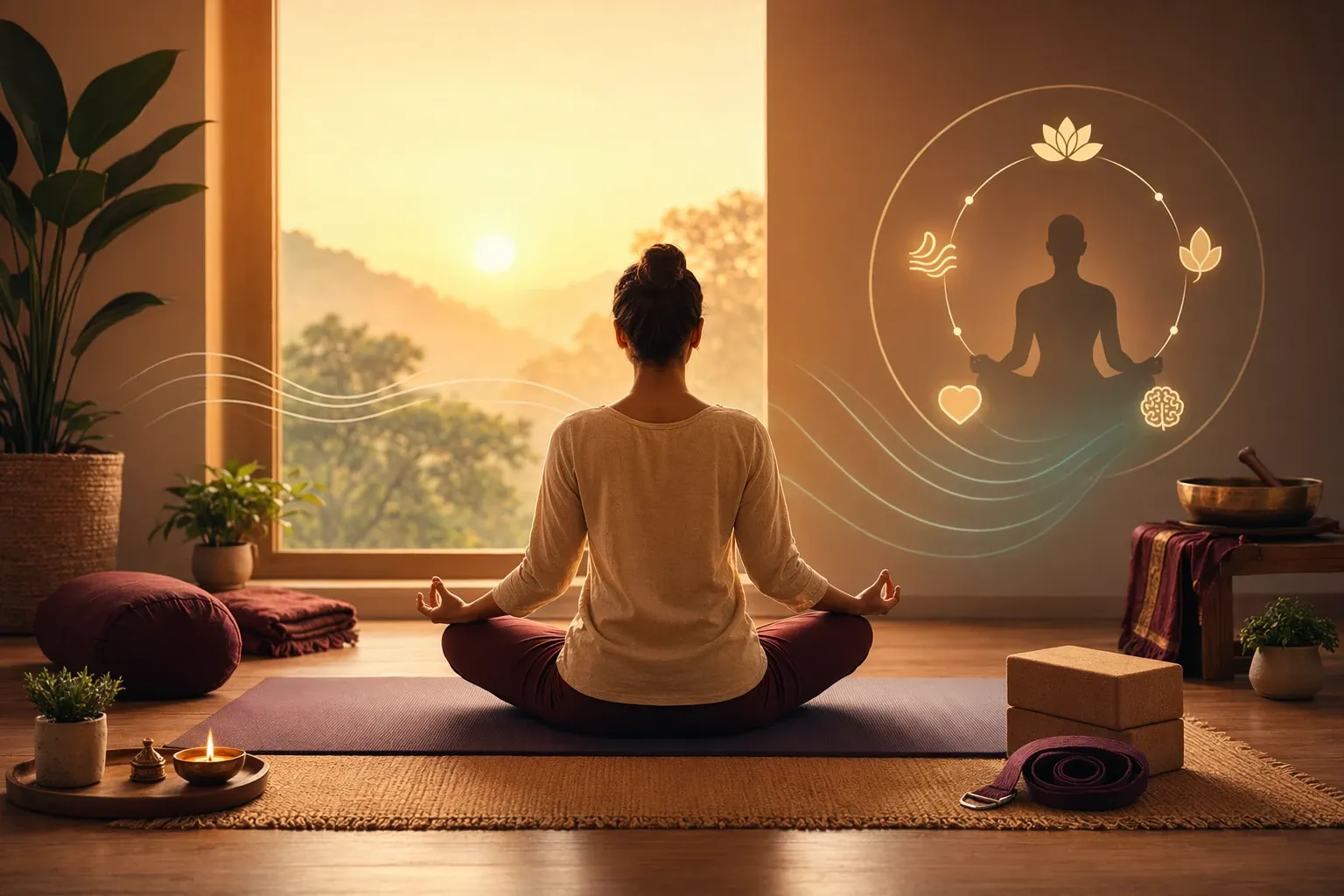
If yoga feels confusing, remember three layers: body, breath, and mind. The body learns steadiness through posture. The breath becomes a bridge between the visible and invisible parts of life. The mind slowly learns not to run behind every impulse. When these layers work together, practice becomes more than exercise.
This does not mean every beginner must become a monk or scholar. It means even a simple practice can be done with the right attitude. Move safely, breathe honestly, reduce ego, and let the practice make daily life more balanced. That is a strong beginning.
For young readers, yoga can also become a practical daily tool. Before studying, pause and breathe. Before reacting in anger, notice the body. Before chasing comparison, return to your own discipline. These small habits may look ordinary, but they carry the spirit of yoga into real life.
What to keep in mind
One beginner mistake is trying to master everything in one sitting. Indian knowledge traditions are layered, and the first reading is only the first friendship. Learn the basic meaning, notice the main values, and then return with better questions. That slow return is how understanding becomes mature.
It also helps to separate respect from blind acceptance. Respect means we do not mock a living tradition or flatten it into memes. Careful thinking means we ask about context, language, community, and interpretation. When both are present, learning becomes honest and warm.