
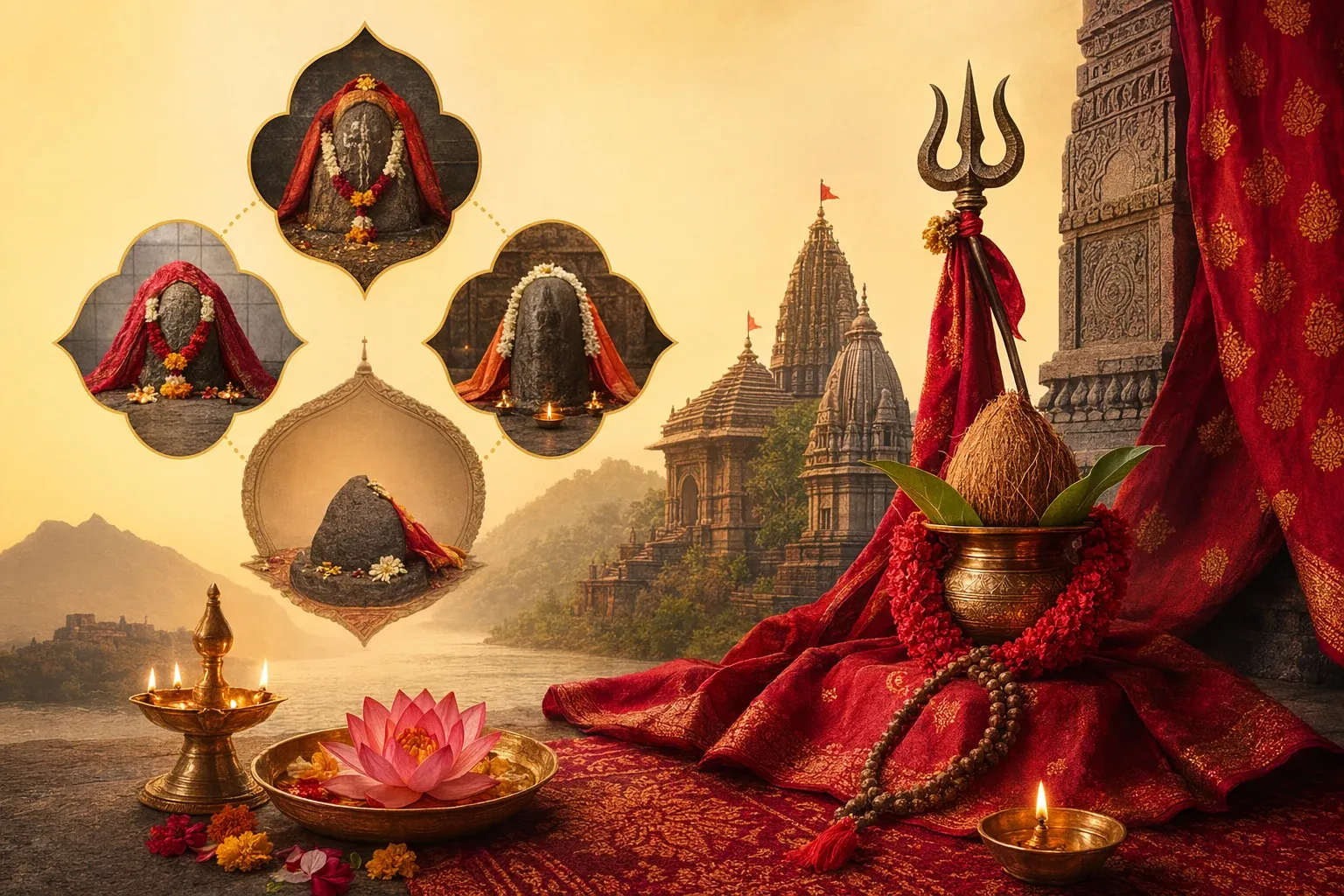
Maharashtra’s “Sade Teen” Shakti Peeth tradition honours three and a half important Devi seats in regional memory. The phrase sounds unusual at first, but it points to a devotional geography where Tulja Bhavani, Mahalakshmi, Renuka Mata, and Saptashrungi are remembered with deep local reverence.
This guide explains what “3.5” means, which places are usually included, and why these Devi seats matter to devotees. It keeps the tone simple for beginners while respecting that local temple traditions can have their own details, names, rituals, and family memories.
What is a Shakti Peeth?
A Shakti Peeth is traditionally understood as a sacred seat of the Goddess. Many accounts connect these places with the story of Sati, Shiva’s grief, Vishnu’s intervention, and the spread of Devi’s presence across the land. The full tradition has many lists and regional variations.
For a wider foundation, read our Shakti Peeth meaning and origin guide. The Maharashtra Sade Teen tradition is a regional devotional set inside this much larger world of Devi worship.
What does Sade Teen mean?
In Marathi and related usage, “sade teen” means three and a half. In this context, devotees commonly speak of three full Shakti Peeths and one half Shakti Peeth. The language does not mean the half seat is unimportant. It is a traditional way of remembering a special regional set.
The commonly remembered names are Tulja Bhavani at Tuljapur, Mahalakshmi or Ambabai at Kolhapur, Renuka Mata at Mahur, and Saptashrungi Devi near Vani or Nashik as the half Peeth in this regional memory.
Tulja Bhavani of Tuljapur
Tulja Bhavani is one of Maharashtra’s most beloved forms of the Goddess. The Tuljapur temple is associated with protection, strength, kingship memory, family devotion, and regional identity. Many devotees approach Bhavani as a mother who gives courage and stands with dharma in difficult times.
For beginners, Tulja Bhavani shows how Devi worship is not only private emotion. It can also shape public memory, warrior traditions, local festivals, and family vows across generations.
Mahalakshmi or Ambabai of Kolhapur
Kolhapur’s Mahalakshmi, also lovingly called Ambabai, is deeply important in Maharashtra’s sacred geography. Lakshmi is widely associated with prosperity, grace, beauty, and auspiciousness, but the Kolhapur tradition has its own powerful temple history and local devotional mood.
Many pilgrims visit Kolhapur as part of a larger Devi circuit. The temple’s living worship, festivals, and regional stories make it more than a name in a list. It is a centre of devotion where the Goddess is experienced as present and active.
Renuka Mata of Mahur
Renuka Mata at Mahur is connected with motherly power, family devotion, and the story-world around Parashurama in many tellings. The hill setting and pilgrimage atmosphere give Mahur a distinct feeling within the Maharashtra Devi map.
Renuka’s place in the Sade Teen memory reminds beginners that Shakti worship includes many forms of motherhood, protection, endurance, and local identity. A Devi shrine may be cosmic in theology and deeply personal in family practice at the same time.
Saptashrungi Devi as the half Peeth
Saptashrungi Devi, near Vani in the Nashik region, is remembered as the “half” Peeth in the Sade Teen set. The name points toward the seven peaks associated with the Goddess. Devotees often experience the shrine through the landscape itself: hill, climb, darshan, vows, and festival crowds.
Calling it “half” should not be heard as disrespect. In sacred geography, traditional counting can carry symbolic memory rather than modern ranking. The shrine remains one of Maharashtra’s major Devi centres.
Why this regional list matters
The Sade Teen tradition shows how devotion becomes regional without losing its larger Hindu meaning. A devotee may know pan-Indian Shakti Peeth lists, but still feel a special bond with Maharashtra’s four remembered seats. Local language, family travel, seasonal festivals, and oral stories make the list alive.
If you want the broader list context, see our Shakti Peeth list guide. If you plan to visit, our Shakti Peeth darshan planning guide is a safer next step than relying only on short social media posts.
How beginners should approach the tradition
Learn the names first, then learn the places slowly. Notice the difference between a pan-Indian Shakti Peeth list, a Maharashtra regional list, and the living temple practice at each site. These are connected, but they are not always identical in wording or emphasis.
For travel, check current temple timings, local rules, road conditions, festival crowd levels, and accommodation. A devotional list can inspire a journey, but practical planning keeps the journey calmer and safer.
What beginners should remember
Maharashtra’s Sade Teen Shakti Peeth tradition honours Tulja Bhavani, Mahalakshmi, Renuka Mata, and Saptashrungi Devi. The “3.5” phrasing is part of regional devotional memory, not a casual ranking of importance. Together, these shrines show how Devi worship connects story, landscape, family faith, pilgrimage, and Maharashtra’s cultural identity.
How the four seats feel different
Tuljapur is often remembered through courage and protection. Kolhapur carries a strong sense of prosperity, auspiciousness, and royal temple culture. Mahur brings the feeling of motherly power and hill pilgrimage. Saptashrungi adds the atmosphere of peaks, vows, and Devi darshan in a dramatic landscape.
These are beginner-friendly impressions, not strict definitions. Every devotee may describe the shrines differently based on family tradition, personal experience, and local stories. That variety is part of the richness of Devi worship.
Festivals, vows, and family memory
Many people meet the Sade Teen tradition through family travel, Navratri devotion, vows, naming stories, or elders speaking about a temple visit. The list is therefore not only a religious fact to memorise. It is also part of how families remember protection, gratitude, courage, and blessings across generations.
During major festivals, these temples can become very crowded. Devotion should go with patience: follow temple rules, respect queues, avoid pushing, and remember that other pilgrims are also coming with hopes, grief, gratitude, and faith.
A respectful travel note
If you plan a route, do not assume all four places can be covered comfortably without checking distance and local conditions. Maharashtra is large, and hill or festival travel can take more time than a map suggests. Check current timings, transport, weather, and accommodation before finalising a trip.
Most importantly, do not treat darshan as a race. The Sade Teen tradition is a doorway into Devi bhakti, regional history, and living culture. Even learning the names carefully can be a respectful beginning.