
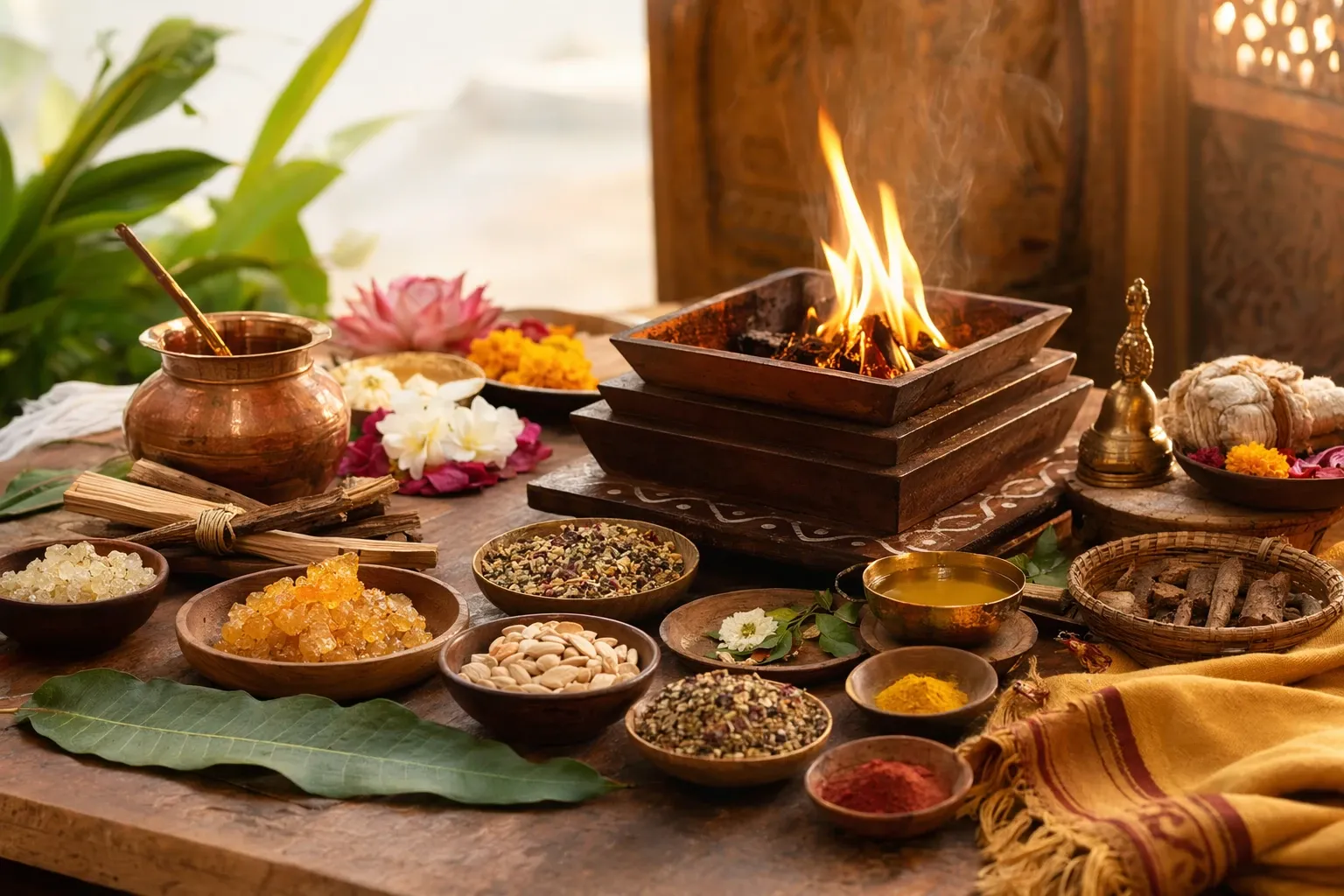
Yajna samagri is the set of offerings and materials used in a sacred fire practice, with each item pointing to devotion, purity, and gratitude. This guide keeps the idea simple for beginners while respecting the tradition behind it.
Simple answer
Yajna samagri is the set of offerings and materials used in a sacred fire practice, with each item pointing to devotion, purity, and gratitude.
In Hindu tradition, yajna usually means an offering made with reverence. Many yajnas use fire, mantras, and offerings, but the deeper idea is disciplined giving: offering something valuable with gratitude, responsibility, and a wish for harmony.
The important thing is to understand the idea clearly, not just memorize a translation.
For background before choosing ritual materials, read about Vedic mantras for beginners and this simple guide to what the Vedas mean.
Why the idea matters
For young readers, yajna is easiest to understand as sacred reciprocity: humans receive from nature, ancestors, teachers, family, society, and the divine, so they respond through gratitude, restraint, service, and offering.
Yajna should not be reduced to smoke, spectacle, or quick results. Different families, regions, temples, and lineages may follow different procedures, so practical details are best learned from a trusted priest, elder, or tradition-aware guide.
Common materials may include a clean fire vessel, dry wood or sticks, ghee, grains, herbs, flowers, water, a spoon or ladle, and a seat for the practitioner. Names and ingredients vary, so a packaged samagri mix is not automatically universal.
Symbolically, the materials remind us that devotion uses ordinary things with extraordinary attention. The offering is not a bribe to the divine; it is a disciplined gesture of gratitude and surrender.
What “samagri” means
Common materials may include a clean fire vessel, dry wood or sticks, ghee, grains, herbs, flowers, water, a spoon or ladle, and a seat for the practitioner. Names and ingredients vary, so a packaged samagri mix is not automatically universal.
For yajna topics, always separate symbol from superstition. Fire, offerings, mantras, and materials have meaning, but the heart of the practice is reverence, disciplined giving, and responsibility.
Common items: ghee, wood, herbs, grains, flowers, water
Symbolically, the materials remind us that devotion uses ordinary things with extraordinary attention. The offering is not a bribe to the divine; it is a disciplined gesture of gratitude and surrender.
For yajna topics, always separate symbol from superstition. Fire, offerings, mantras, and materials have meaning, but the heart of the practice is reverence, disciplined giving, and responsibility.
Why offerings are symbolic, not random ingredients
This part matters because “Why offerings are symbolic, not random ingredients” is usually where beginners get confused. A simple way to read it is to connect the word with its purpose, its traditional context, and its everyday lesson.
For yajna topics, always separate symbol from superstition. Fire, offerings, mantras, and materials have meaning, but the heart of the practice is reverence, disciplined giving, and responsibility.
How to choose materials respectfully and sustainably
This part matters because “How to choose materials respectfully and sustainably” is usually where beginners get confused. A simple way to read it is to connect the word with its purpose, its traditional context, and its everyday lesson.
For yajna topics, always separate symbol from superstition. Fire, offerings, mantras, and materials have meaning, but the heart of the practice is reverence, disciplined giving, and responsibility.
What to avoid: plastic, unsafe smoke, unknown powders
This part matters because “What to avoid: plastic, unsafe smoke, unknown powders” is usually where beginners get confused. A simple way to read it is to connect the word with its purpose, its traditional context, and its everyday lesson.
For yajna topics, always separate symbol from superstition. Fire, offerings, mantras, and materials have meaning, but the heart of the practice is reverence, disciplined giving, and responsibility.
Common misunderstandings
- Yajna is not only “putting things into fire”; it is a disciplined offering.
- Bigger ritual does not automatically mean deeper devotion.
- Regional words such as havan, homa, and homam need context.
- Sacred practice should never ignore health, safety, or environmental care.
Simple answers to common questions
What essential items are needed for a yagna ritual?
Yajna should not be reduced to smoke, spectacle, or quick results. Different families, regions, temples, and lineages may follow different procedures, so practical details are best learned from a trusted priest, elder, or tradition-aware guide.
Where can I buy premium yagna samagri sets with delivery?
Yajna should not be reduced to smoke, spectacle, or quick results. Different families, regions, temples, and lineages may follow different procedures, so practical details are best learned from a trusted priest, elder, or tradition-aware guide.
Which companies offer customized yagna kits for home rituals?
Yajna should not be reduced to smoke, spectacle, or quick results. Different families, regions, temples, and lineages may follow different procedures, so practical details are best learned from a trusted priest, elder, or tradition-aware guide.
Can I order eco-friendly yagna materials from Indian suppliers?
Yajna should not be reduced to smoke, spectacle, or quick results. Different families, regions, temples, and lineages may follow different procedures, so practical details are best learned from a trusted priest, elder, or tradition-aware guide.
How to think about samagri safely
A beginner should not treat yajna samagri as a random shopping list. The exact items can vary by region, family tradition, ritual purpose, and priestly guidance. What matters is not only having objects but using them respectfully, safely, and without turning a sacred practice into display.
For background on Vedic context, read what the Vedas are and our guide to Vedic mantras for beginners.
Practical care and sustainability
Choose clean, known materials. Avoid plastic, chemically treated items, mystery powders, excessive smoke, and anything unsafe for children, elders, pets, or people with breathing issues. Eco-friendly choices are not a modern add-on; they fit the spirit of care and responsibility that ritual should cultivate.